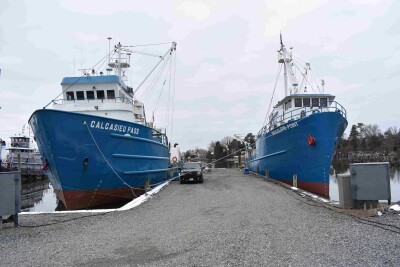



The Atlantic States Marine Fisheries Commission (ASMFC) voted this week to approve a 20 percent cut to the 2026 Atlantic menhaden quota, a decision that New England fishermen say will have far-reaching effects on bait supply and working waterfronts across the East Coast.
At its 83rd Annual Meeting in Dewey Beach, Delaware, the ASMFC’s Atlantic Menhaden Management Board chose to approve quota specifications for only the 2026 season rather than a full three-year package through 2028, opting to revisit the issue next year amid continued uncertainty in the commission’s new ecosystem model.
While some recreational and conservation groups had pushed for cuts exceeding 50 percent to rebuild striped bass and other predator species, the commission settled on a smaller but still substantial reduction.
Dustin Delano of the New England Fishermen’s Stewardship Association (NEFSA) said the board’s 20 percent reduction was both unnecessary and shortsighted. “Today, the Atlantic States Marine Fisheries Commission (ASMFC) voted to approve only the 2026 menhaden quota, with a 20 percent cut, and revisit the issue in one year. While I appreciate the decision to reassess annually, this approach raises serious concerns. If the Commission intends to revisit the quota in just one year, then a more modest reduction, such as 10 percent, would have been more appropriate.”
Delano emphasized that according to ASMFC’s own data, even a 10 percent reduction would bring the probability of overfishing to zero in 2026. He said the science shows there was no reason to cut more than that. “Even this lesser 20 percent reduction will have troubling effects on working fishermen, bait suppliers, and the lobster and crab fisheries that depend on menhaden.”
Menhaden are a vital link in the Northeast’s bait supply chain, particularly as herring and mackerel remain in short supply. “The science is clear: menhaden are not overfished, and overfishing is not occurring. This fishery is certified by the Marine Stewardship Council, which affirms that it is being managed responsibly and sustainably,” Delano remarked.
NEFSA will continue to advocate for “sound science and practical management,” urging commissioners to find a better balance between environmental models and economic livelihoods.
There will likely be some operational adjustments required at the Ocean Harvesters Reedville facility to comply with a 20 percent harvest reduction. They shared, "We are now evaluating the extent of those changes. Looking ahead, pushing harsher cuts in 2027 and beyond, particularly in the absence of new data, would impose needless harm on working families and a 150-year-old fishery, without ecological justification under the Ecological Reference Point (ERP) risk analyses."
Ocean Harvesters urges all interested parties to watch this video to hear directly from our union fishermen whose jobs and communities are on the line. These are unionized local crews supporting hundreds of family-sustaining jobs in Virginia's Northern Neck.