

Washington Maritime Blue is a Seattle-based NGO with a $3 million budget and a number of focus areas, including renewable energy, maritime decarbonization, sustainable fishing, community engagement, and maritime workforce development.
Dontay Proctor-Mills, who handles community engagement for Maritime Blue, hosted a presentation on workforce development during the 2025 Pacific Marine Expo in Seattle, with speakers from partner organizations, such as Sea Potential.
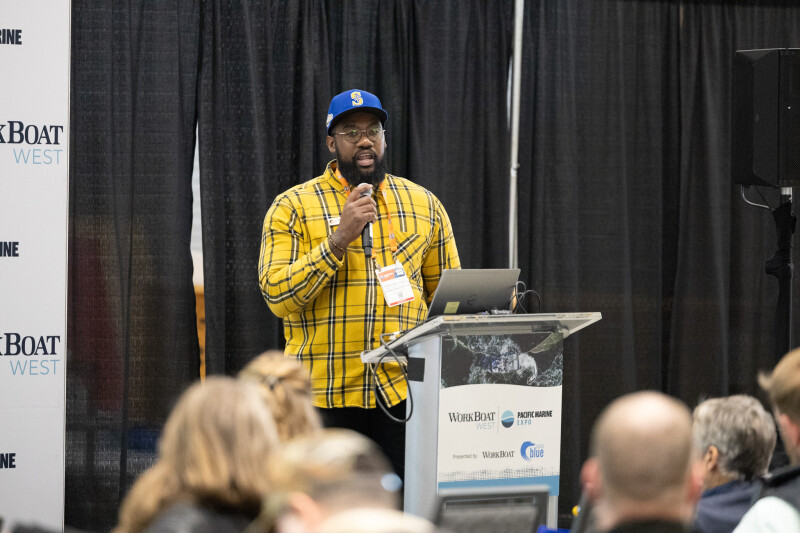
According to Ebony Welborn, co-founder of Sea Potential, the organization works towards creating opportunities for Black, Indigenous, People of Color (BIPOC) youth, ages 12–18. “We want to raise awareness about marine jobs,” said Welborn. “But to do that, we have to heal things like water-related trauma, reconnect to positive water stories, and expand people’s idea of the maritime industry.”
Welborn raised issues not frequently associated with developing a maritime workforce. “Our maritime industry consulting centers on creating workplaces that prioritize diversity and inclusion, moving beyond assimilation to empowering the next generation to thrive,” says Welborn. “Reciprocal relationships mean meeting young people where they are and stimulating and supporting their curiosity about the sea and potential jobs. We are looking for ways to help them realize that these jobs are meaningful, that they can provide them a well-paying and stimulating career experiences."
Sea Potential may be unique among programs intended to promote the marine trades in that it aims to serve young people who might not otherwise see a fit for themselves in the marine world. Sea Potential offers programs starting with 12 to 15-year-old students,.
"We take them out on field trips that range from meeting marine biologists and other marine professionals, to teaching them how to sail to teaching sailing history,” says Welborn, adding that the intent is to nurture a sense of familiarity and comfort with the sea. “It’s about visioning their relationship to water and what they could do in the industry.”
For 15- to 18-year-olds, Sea Potential offers programming that provides participants with hands-on experiences in the maritime industry. In one of their weeklong daycamps, for example, students meet more marine science professionals, explore area beaches, create art, and write about their experiences with the water.
Another Sea Potential program focuses on woodworking. The organization partners with Tacoma Boat Builders to serve girls, and gender expansive youth. The idea, according to Sea Potential, is to bring these non-male students to “reflect on the connections between land, water, wood, boats, and people.”
Finally, Sea Potential encourages career transitioning, and post-high school, students to explore career paths in the maritime industry, from boatbuilding to engineering. “And fisheries,” says Welborn. “We’re looking at all the marine industries, and that’s one of them.”
She also encourages marine professionals, and anyone passionate about helping young people, to join Sea Potential’s mentorship program options. “Mentors help to create safe, supportive, and empowering experiences for people as they explore the maritime world,” she says. “If you’re interested in being a one-on-one mentor for job seekers looking to get into the maritime industry, please feel free to reach out—no marine experience necessary.”