

A newly released study by Oregon State University and NOAA Fisheries researchers shows that marine heat waves in increasing frequency are having an impact on the growth and maturation of black rockfish in Oregon and Washington.
"We do know that the occurrence of marine heatwaves is more often and more intense," said Claire Rosemond, now a fisheries biologist at NOAA Fisheries' Northwest Fisheries Science Center in Newport, Ore. "There are some monitored ocean indicators that can help us understand if the coming year would be warmer or cooler, but it is harder to predict how hot or how cold."
Results of her dissertation while at OSU with fisheries biologist Melissa Head, also of the Northwest Fisheries Science Center, and Scott Heppell, a professor at OSU 's Department of Fisheries Wildlife and Conservation Sciences, were published on June 3 in the journal Ecological Applications.
The study investigated the impact of intense and less intense marine heatwaves on black rockfish reproduction and growth along the Pacific Coast between 2014 and 2021.
They found that while black rockfish exhibited elevated growth during intense marine heatwaves, their maturation was delayed. In fact, during intense marine heatwaves, maturation was postponed, reproductive success was lower by one third, and parasite prevalence in ovaries was nominally high.
Younger females were large at age during intense marine heatwaves, and throughout the last decade, growth rate coefficients were higher than what is typically expected for slower-growing fishes like rockfishes.
The increase in juvenile growth during intense marine heatwave conditions may be explained by the temperature-size rule, but our observation of postponed maturation contradicts theoretical predictions, they said. The temperature-size rule states that adult fish tend to be smaller in warmer waters and larger in colder waters.
The research reveals that marine heatwaves can induce shifts in fish growth and maturation, but that the temperature-size rule may not provide an adequate framework to predict how increasing temperatures associated with climate change may influence reproductive development and maturity for fishes with complex reproductive strategies.
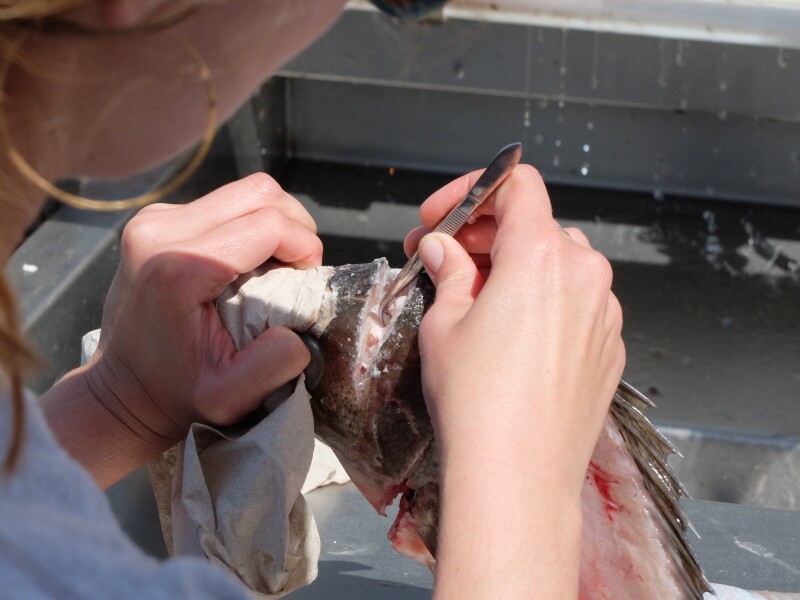
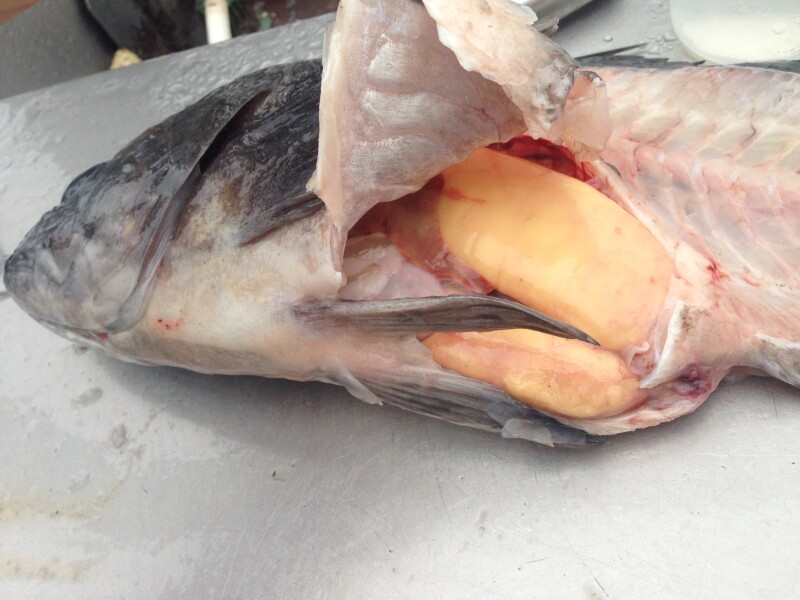
A curiosity about this species is that most rockfish can reabsorb their eggs if conditions are not favorable. "These fish get ready to spawn, but if conditions are not good enough, their bodies can decide 'not this year,'" said Rosemond. "Most fish are adapted to deal with temperature changes in warm and cool years, but they are not adapted to when temperatures get too hot. It is about the intensity of these events."
The ability of female black rockfish to reabsorb developing eggs is built into their reproductive strategy.
Abortive maturation (AM) is a reproductive anomaly observed in fish where ovaries begin to develop for the spawning season, but the oocytes (development eggs) are reabsorbed before reaching full maturity. This means the female fish doesn't spawn in that season despite initiating the reproductive process.
In black rockfish, AM may occur in adolescent females that are physiologically mature but not yet functionally mature, meaning they are not contributing to reproduction yet.
Skip spawning is the phenomenon where sexually mature fish fail to spawn during a reproductive season. This differs from AM in that it applies to fish that have previously spawned, while AM applies to adolescent fish that are experiencing their first reproductive cycle. In adult fish, skip spawning can occur due to mass atresia (similar to AM) or a complete failure to develop oocytes for the season.
Both abortive maturation and skip spawning have been linked to factors like poor feeding conditions and insufficient energy reserves. If a fish doesn't have enough energy to produce viable eggs, it may reabsorb them or postpone spawning until a more favorable season.
Both abortive maturation and skip spawning have important implications for fisheries management, especially for species like black rockfish, which are relatively slow to mature and have long lifespans. In Alaska, they can live to be 50 years old, so they have the ability to wait for more favorable conditions to reproduce, Rosemond said.
Part of her research work now is on groundfish surveys on the West Coast, and Alaska has a similar program. "I think this type of research has a meaningful impact for understanding fish populations and environmental influences on the fishery," she said.
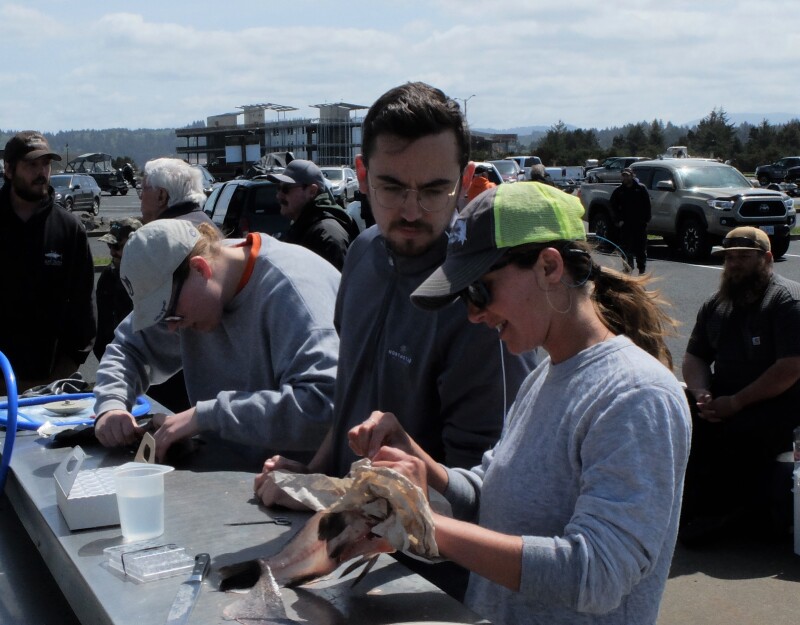
Rockfish reproduction is used in a population assessment of rockfish that is presented to fishery managers, but environmental influences on reproduction are not used directly in stock assessment. "The way our fisheries are managed, we don't have enough data to tie in climate directly, but fishery managers are interested in research that includes some accounting for differences along the coast as well as from year to year, so we can use the data we have to make assessments biologically realistic to what is going on in the ocean year to year," she said.
"What we are realizing when we are assessing the status of rockfish populations is it is really important to include updated research on maturation. For rockfish, their maturation can change with environmental conditions, and based on where you are fishing on the coast.
"There is a lot of variation. Fish that live in an environment that changes frequently are going to have more variation built into their reproduction," she said.