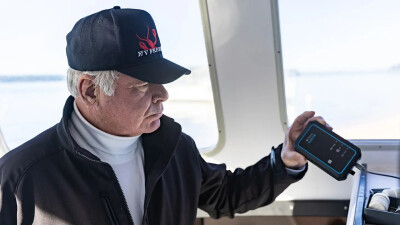


NOAA Fisheries announced on July 2 that it is modernizing the electronic reporting system for East Coast vessels. Voluntary electronic reporting became available over a decade ago, in 2011, when managers realized that electronic technologies could provide accurate data faster. Then, after making electronic reporting compulsory in the commercial fleet in 2021, NOAA saw compliance rates for report submissions within the required 48 hours after the end of a trip improve from 58 percent in November 2021 to 84 percent in October 2022.
In an effort to provide managers and stakeholders with better access to more streamlined data sets, NOAA is connecting its five electronic reporting systems for the East Coast— East Coast science center logbook systems; the Greater Atlantic Regional Fisheries Office Vessel Trip Reporting; Southeast Regional Office For-Hire Integrated Electronic Reporting; Atlantic Highly Migratory Species Pelagic Fisheries Logbook; Southeast Commercial Fisheries Logbook, and Southeast Headboat.
“The goal is to have all federal logbook data from Maine through Texas collected electronically and available in a centralized, standardized system,” says a NOAA July 2 press release.
“It is as if we were constructing a building to physically house these programs,” says NOAA spokesperson Andrea Gomez. “If we put each program in a separate building, we would then need to separately maintain five properties.”
Gomez notes that data systems are like buildings in that there are many common elements. “We are choosing to develop these common elements once, not five times,” she says. “Resulting in cost savings and greater efficiency.
In addition to the synergy created by developing these systems together, data analysis spanning multiple data sets becomes much easier, Gomez adds. “For the fishing population, it becomes much easier to address multiple reporting requirements imposed on a single trip due to permitting combinations.”
NOAA Fisheries believes the new integrated database system will draw from data captured across multiple offices, allowing the agency to increase information sharing and prevent duplicative entries, and make it easier to analyze federal data for the entire East Coast.
This initiative also aims to enhance support for critical monitoring requirements, such as quota monitoring and stock assessments. It will provide fishery managers with near-real-time, high-quality data for the entire East Coast and make it possible to answer questions such as fish stock locations and catch frequency.
“From the time a fisherman submits a report, it takes only seconds for that data to be available in the database,” says Gomez. “Rapid access to data minimizes the uncertainty associated with knowing that reported landings may spend weeks as paper mail before they become available to data analysts.”
The new system will be cloud-hosted and is intended to provide superior performance while improving access to the data from anywhere in the country, Gomez notes. All that remains to be seen is if fishermen find that the new system provides the promised benefits.