




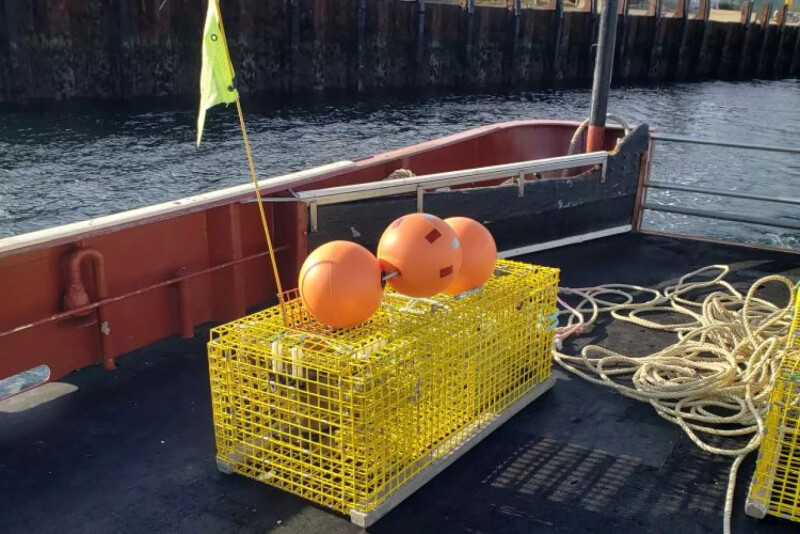
Maine's two U.S. senators are pushing back on federal efforts to make ropeless gear the centerpiece of North Atlantic right whale conservation, warning that forcing an unproven technology on the lobster fleet could devastate the fishery.
In a letter to Eugenio Piñero Soler, assistant administrator for fisheries at the National Marine Fisheries Service, Sens. Susan Collins, R-Maine, and Angus King, I-Maine, urged the agency to take lobstermen's concerns seriously and pursue flexible alternatives before pursuing any new rulemaking.
"A single, uniform solution, particularly one that mandates technology that is not yet proven at scale, is not the right path forward for this fishery or for the conservation goals we share," the senators wrote.
The letter followed the Maine Fishermen's Forum in early March, where Soler heard directly from lobstermen about the practical barriers to ropeless fishing. The senators echoed what they heard on the ground: small vessels don't have the capital, deck space, crew, or familiarity with high-tech systems to absorb a forced transition. The Maine Lobstermen's Association has estimated that transition costs alone would run at least $45 million industry-wide.
Operational concerns go beyond upfront costs. On-demand gear takes longer to haul, and with hundreds of traps per trip, that time adds up fast. The senators noted that for some gear configurations, the productivity loss rivals the cost of the equipment itself. Safety is also a serious issue — with more than a dozen manufacturers developing ropeless systems that can't yet communicate with each other, fishermen would have no reliable way to locate submerged gear on busy, mixed-use grounds.
The association has warned that mandatory ropeless gear would drive up operating costs and "could create pressure for consolidation of the fishery" — a direct threat to Maine's owner-operator model.
Maine lobstermen have shown a willingness to engage. Through the Maine Innovative Gear Library, 33 active testers across all seven lobster zones have completed more than 3,200 hauls as of December 2025. But initial data continue to flag cost and time burden as major barriers, and full results aren't expected until later in 2026.
Collins and King are urging NMFS to continue developing dynamic area management as an alternative strategy in partnership with Maine's Department of Marine Resources, and to build future rulemaking collaboratively with industry.
"We encourage NMFS to approach future rulemaking with a genuine commitment to flexibility and co-development directly with stakeholders," the senators wrote.
.jpg.small.400x400.jpg)
