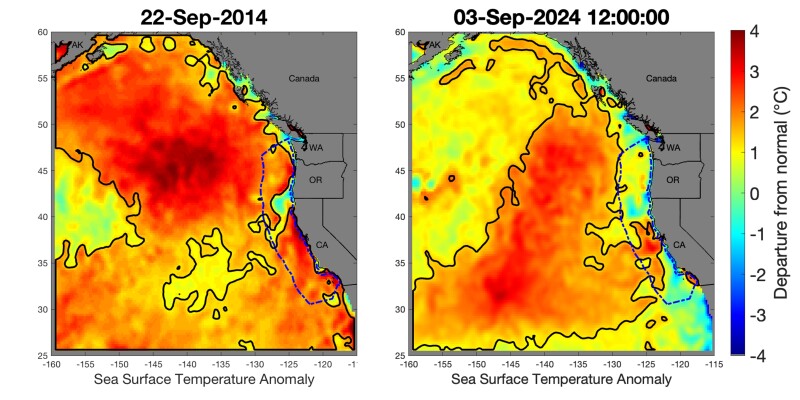
The marine heat wave in the Pacific Ocean, familiarly known as “the Blob,” caused major issues for Pacific fisheries and seabirds in 2014-2016, and some news agencies are reporting that the blob may be on its way north again.
Few fishermen are alarmed, and the National Oceanic and Atmospheric Administration (NOAA) Blobtracker, last updated on Sept. 2 indicates that the blob will behave much as it has the last few years.
But a slew of news stories on the Blob hit the internet in October. According to salmon fisherman Nick Zuanich, posting on Facebook, the articles are based on August temperatures, and nothing to get alarmed about.
“The blob is what happens when the typical fall/spring southerly storms don't show up. Southerly storms get the Pacific current running to the north, hitting the continental shelf, bringing cooler, nutrient-rich waters to the surface, thereby cooling the North Pacific. This has happened once again, thankfully,” says Zuanich.
“If you want to know what scares me, it's warm, late summer weather switching to cold, high-pressure, northerly winds. Then I will be thinking about selling my Puget Sound salmon permit. Pray that doesn't happen again.”
NOAA’s Blobtracker concurs with Zuanich. “The current heatwave forecast (https://psl.noaa.gov/marine-heatwaves/) suggests heatwaves may continue through the next several months in the far offshore regions where they currently reside, with lower likelihoods of occurrence along the coast, supporting the idea that upwelling is likely to resume along the shore and mitigate the coastal MHW [marine heat wave],” says the September 2 update.
Nonetheless, the Blobtracker points out that the last few years have seen some of the highest surface water temperatures on record in the Pacific.
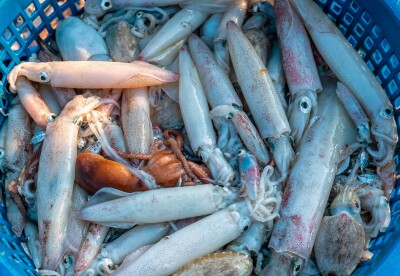
In 2023, scientist Chris Free of the University of California, Santa Barbara, led a team that analyzed the impacts of the blob on fisheries and communities in a report, Impact of the 2014–2016 marine heatwave on US and Canada West Coast fisheries: Surprises and lessons from key case studies. While the Blob of 2014-16 led to disruptions of the North Pacific cod fishery, increased Domoic acid in Dungeness crab, starving seabirds, and other negative impacts, some species like squid and shrimp thrived in those years.
One of the big problems, Free’s paper notes, is adapting management to fast-changing ecosystems.
“The heatwave also benefited many species, which present their own unique management challenges,” the authors write. “For example, an explosion in the abundance of shortbelly rockfish in Oregon, a non-target bycatch species, required rapid management action to avoid the closure of the Pacific hake fishery, which nearly exceeded its bycatch limit within the first two weeks of the season.”
“Similarly, the northward expansion of California market squid required rapid management action to regulate the newly emerging fishery in northern latitudes.”
The paper adds that flexible, agile, and informed management “is thus crucial to preparing coastal communities for both positive and negative climate impacts.”