Southeast Alaska fishermen hoping to decarbonize working waterfronts and lower their operating costs are turning to innovative propulsion systems as a solution.
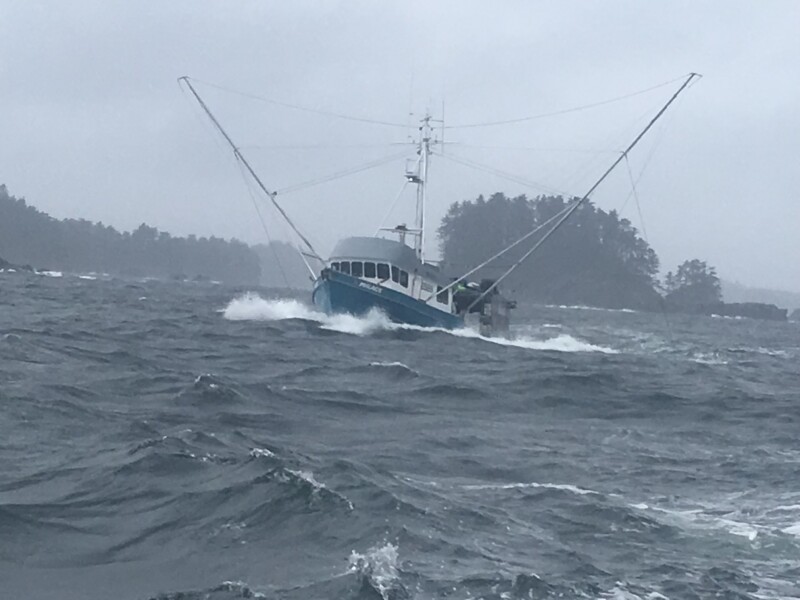
In November, the Alaska Longline Fishermen's Association (ALFA) plans to begin reducing the carbon footprint of its fleet by converting first one, then a second, diesel-powered fishing boat to hybrid diesel/electric vessels. A third conversion — for full-electric propulsion on a mariculture boat — is also planned for next winter.
For several years, ALFA has been exploring ways to improve fuel use and efficiency. Working with Chandler Kemp, an assistant professor of sustainable energy and energy efficiency consultant affiliated with the University of Alaska Fairbanks and Stanford University, ALFA has developed blueprints for converting commercial fishing boats to hybrid diesel/electric systems and eventually to hydrogen fuel cell or fully electric systems.
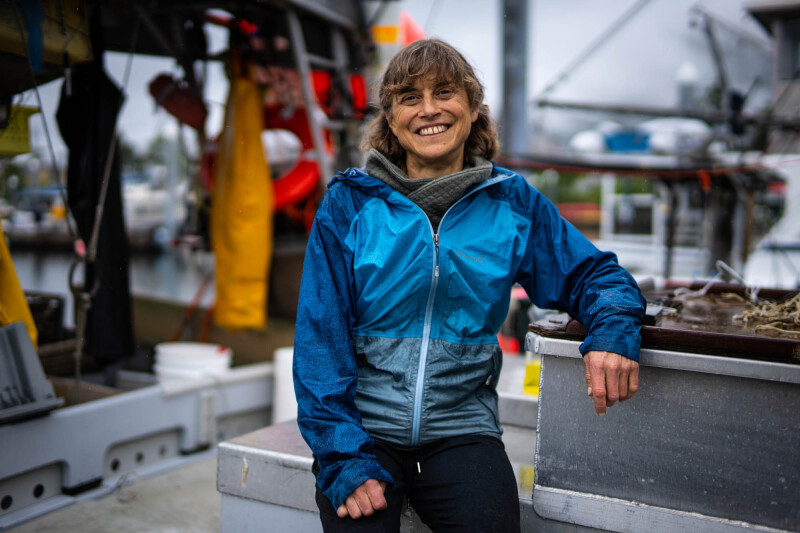
"We also have funding to write a seafood industry decarbonization feasibility plan to help the processing sector, fishing sector and we also hope to include hatcheries," said Linda Behnken, executive director of ALFA.
In 2023, Behnken completed a term as co-author of the Alaska chapter for the Fifth National Climate Assessment. That year, ALFA noted in its annual report that the association wrapped up an Energy Transitions Initiative Partnership Project (ETIPP) with the National Renewable Energy Lab and applied to the Department of Energy (DOE) for funds to convert two fishing boats to hybrid diesel/electric and one mariculture boat to full electric.
DOE awarded ALFA the funding, and the ALFA BETA (Boat Energy Transition Accelerator) finally had the resources to act on ETIPP recommendations. ALFA received a $700,000 DOE award to drive the transition forward in the commercial fishing fleet and, in 2024, a $514,000 appropriations award from Sen. Lisa Murkowski, R-Alaska, to help decarbonize the seafood industry.
The first conversion was scheduled for the winter of 2023–2024, but a change in participating boats led to system changes and a delay.
Plans now call for ALFA to work with Chandler and Jeff Kemp of Kempy Energetics to install a Transfluid system in the Mirage that will support both diesel and electric propulsion, charge batteries from the genset or main engine, and allow the vessel captain to shut down both engines to run his freezer off the batteries. Once the Mirage conversion is complete, a second vessel, the Energizer, will be converted.
Kemp said the first hybrid diesel-electric fishing boat that he knows of was built about a decade ago in Norway. Since then, new fishing boats are often built with hybrid propulsion systems in Norway. Eastern Canadian fisheries are also pursuing hybrid fishing boats, but to his knowledge, no hybrid fishing boats are in operation in the United States, he said.
Kemp estimates the cost of converting from straight diesel to a hybrid diesel-electric setup at about $150,000 for materials. The upcoming conversions are covered by grants, and Kemp said the materials cost for the average vessel owner would be about the same.
But what environmental impact can be expected once such transitions are made? "Nearly all of the carbon emissions from diesel engines enter the environment from the exhaust and mix with the atmosphere," Kemp said. "As the concentration of carbon dioxide in the atmosphere increases, some of the carbon dioxide dissolves into the ocean."
The percentage of fuel savings for fishing vessel operators will depend heavily on the operating profile. For vessels like the Energizer, which make relatively short trips, the projected fuel savings are estimated at 10% to 25%.
At current costs, the fuel savings alone from these projects would not make them economical for harvesters without grant support, Kemp said. Nonetheless, DOE’s Vehicle Technologies Office invested in these pilot projects because the technology shows potential for cost reductions if adopted at scale, and fishers stand to benefit from quieter operations and reduced engine maintenance requirements in addition to fuel savings, he said.
"Beyond the specific technologies that we are testing, this work provides a foundation for expanding on electric propulsion systems through the use of fuel cells or other emerging technologies in the future," he said.
Kemp, who holds a bachelor’s degree in physics from Cornell University and a master’s in energy resource engineering from Stanford, also founded Kempy Energetics in Juneau in December 2015. The firm performs energy audits, develops mathematical models of energy systems, evaluates policy proposals, and publishes research.
With current diesel fuel costs in Alaska at over $4 a gallon, ALFA continues to seek additional grants and loans for the project to reduce the fishing industry’s impact on climate change.
ALFA will be carefully documenting the costs and lessons learned in its pursuit of energy savings, Behnken said.