Abundant research on harmful algal blooms (HABs), climate change impacts on Alaska’s commercial fisheries, and efforts to make the state’s waters safer to navigate was presented Jan. 26–29 at the 2026 Alaska Marine Science Symposium.
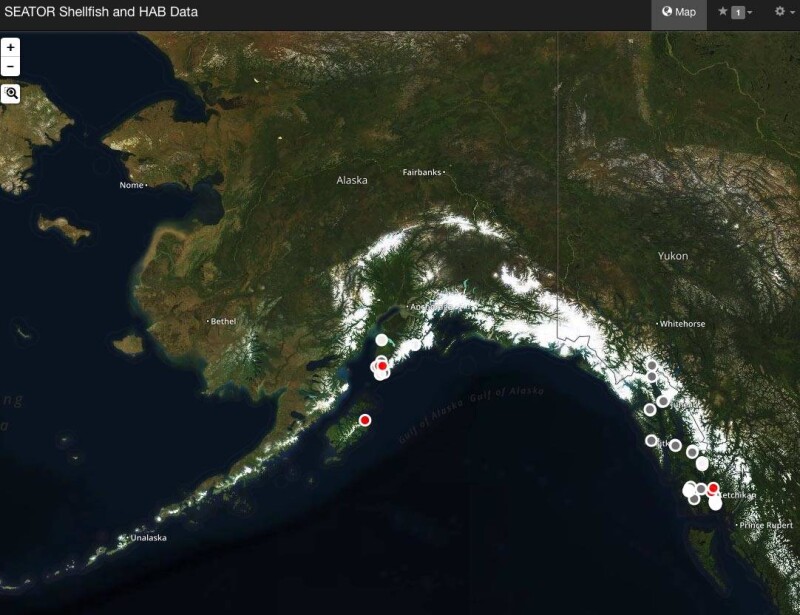
Most of the state is subject to the impacts of HABs, including the Gulf of Alaska coastline, which has a long history of HAB impacts, noted keynote speakers Thomas Farrugia, a marine ecologist with the Alaska Ocean Observing System in Anchorage and Rose Masui, the outreach and engagement lead of the Alaska HAB Network at Kachemak Bay National Estuarine Research Reserve in Homer, Alaska.
Several dozen other presenters also addressed approximately 700 participants at the symposium, organized annually for over 30 years by the North Pacific Research Board in Anchorage. The event showcased marine research in the Arctic Ocean, the Bering Sea, and the Gulf of Alaska.
Now the Aleutian Islands and Bering Sea are seeing large HAB events and impacts from algal toxins, and researchers are trying to determine the best way to address these emerging issues, Farrugia and Masui said.
HABS have differing impacts on fish and shellfish, and this varies between species as well. So far, data show that HAB toxins accumulate in fish species primarily in their organs and not within the muscle at levels of concern. Most of this research is focused on saxitoxins produced by the phytoplankton Alexandrium, which are connected with paralytic shellfish poisoning. Pseudo-nitzschia and domoic acid are also a concern and are being investigated, the researchers said.
For commercially harvested shellfish, HABs have triggered temporary farm closures when toxin levels exceed regulatory limits. These closures last at least two weeks, and reopening requires three consecutive samples below the regulatory threshold.
In Kachemak Bay, the primary concern has been shellfish, which can accumulate toxins that may cause human illness if consumed. In 2025, during a confirmed saxitoxin event on St. George Island in the Pribilofs, dead halibut and other fish species were also found washed ashore, though little information is available about the cause, Farrugia and Masui said. Saxitoxin is a potent neurotoxin and the most well-known cause of paralytic shellfish poisoning. Research conducted in Kachemak Bay in 2025 focused on shellfish, seabirds, and marine mammals, and no impacts on salmon or halibut were recorded.
HABs may also pose a risk to Alaska’s crab fisheries. Commercial crab fisheries on the West Coast have been closed due to saxitoxins and domoic acid. To date, researchers have not documented large-scale mortality events of salmon, halibut, or crabs directly linked to HABs, though they noted such impacts could be occurring without resulting in visible accumulations of dead animals on shore. "We do know that these toxins are found and accumulate in fish species, so there is a potential for HABs to have an impact on populations of fish and crabs. More research is needed to quantify this impact," they said.
At present, there are many unknowns about the potential threats of HAB to salmon and halibut. Preliminary results indicate that the toxins are primarily accumulating in organs and not in fish muscle, which is what people consume. "But as ocean conditions change in areas like the Bering Sea, we would expect these HABs to get more common and long-lasting and could potentially impact the populations of fish, birds, and marine mammals," they said.
Retired U.S. Coast Guard Capt. Steve White, now executive director of the Marine Exchange of Alaska (MXAK) in Juneau, delivered his keynote address on the importance of collaborative efforts to make traveling safer on Alaska waters.
White noted that the oceans and lands of Alaska are critical to the nation's blue economy. MXAK and Arctic Watch build infrastructure to track vehicles, gather critical information, and disseminate communications for safe, secure, and environmentally responsible maritime operations.
Arctic Watch itself is a collaborative initiative designed to manage sea traffic in the Arctic, specifically starting in the Bering Strait region. MXAK does this through installing, managing, and maintaining an extensive system of marine safety and security sites and utilizing a 24-hour, state-of-the-art Maritime Communications Center. MXAK is also responsible for installing and maintaining over 60 weather stations and developing the state's comprehensive vessel tracking system.