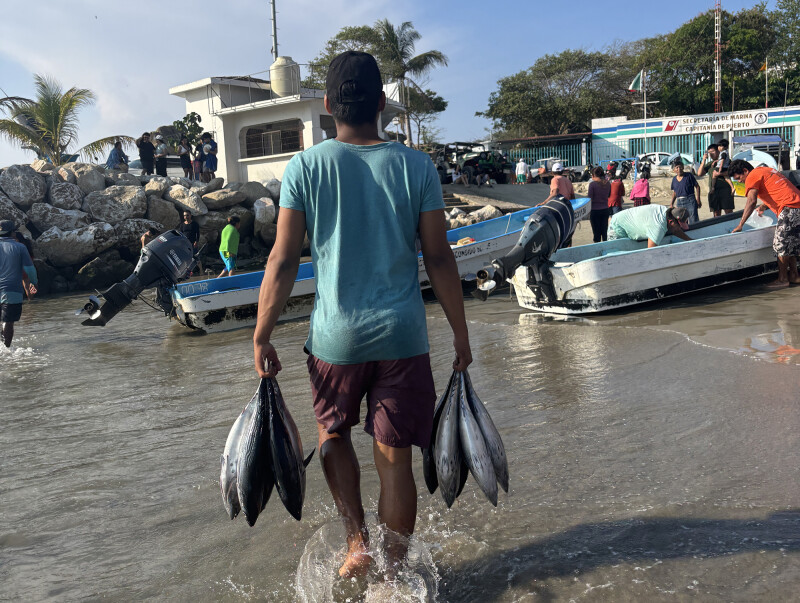
It’s 6 a.m. and still dark on the beach in Puerto Escondido, Mexico. Members of the local cooperative are already launching their boats, mostly 20- to 24-foot fiberglass skiffs with high flared bows for slamming through the choppy seas. But this morning is calm, and fishermen arrive by truck, taxi, and scooter. Some carry gas tanks. Others carry gear, mostly handlines. A few have rods.
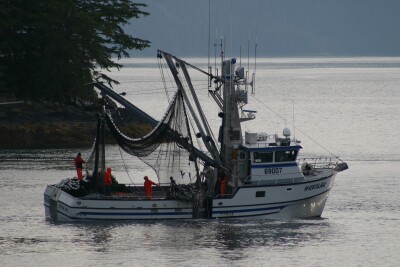
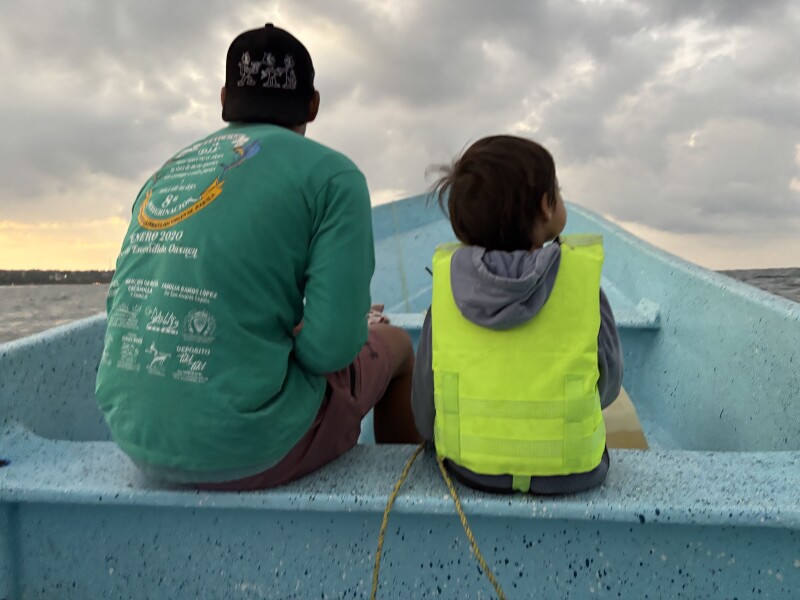
My four-year-old son went to bed early and was up at 5 a.m., excited to go fishing. I see a lot of fishing families on Instagram and Facebook with little ones joining the work. The Channa Sea in Alaska has some very young crew, as do many others around the U.S. coasts, like Jay Dinsmore in Lubec, Maine, who has taken his daughters from an early age. They are learning a way of life as much as a way to make a living. I don’t have a boat, so my little guy and I must find our way. A few Puerto Escondido companies offer sport fishing trips starting at $300, but that is not our thing. We wait in the predawn for a commercial fisherman, Rene Hernandez. He and his son, also Rene, about 18 years old, agreed the day before to take us with them, if we work.
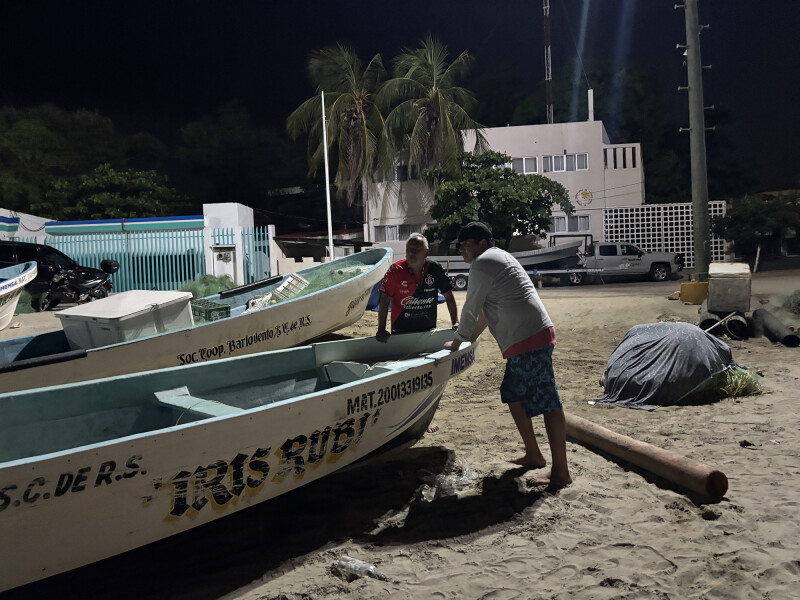
Rene Sr. started fishing with his father when he was five years old, and his father is still at it. Grandfather Hernandez and his crew push his boat over rollers until it hits the water, and a small wave lifts it. Rene beckons us to get aboard his father’s boat for a ride out to his, which bobs on a mooring just off the beach. Barefoot, we wade into the gentle waves, and Rene lifts my son up and into the boat. I follow quickly, and we are soon repeating the process alongside Rene’s boat, the Isla Arena, the Sand Island.
After hooking up the gas tank, Rene Sr. starts the 60-hp Yamaha four-stroke, and we motor slowly out of the harbor. In contrast, another boat comes roaring through the harbor at full speed, slams into the beach, and runs far up onto the sand. These are the red snapper fishermen who have been out since dusk. Women with baskets await them, ready to buy fish for their shops and restaurants.
The full moon is setting in the west as the sun rises in the east, half a red orb breaks above the horizon. Motoring down along the coast, we pass our hotel, and my son waves to his mother on the balcony. It’s an old scene revisited — women watching their men go out to sea — but in this case on a very small scale, as we expect to be back by 9 a.m.
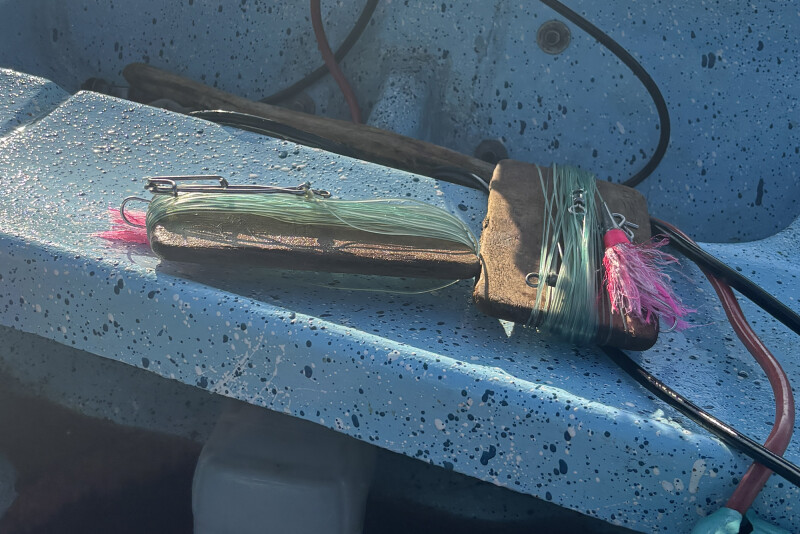
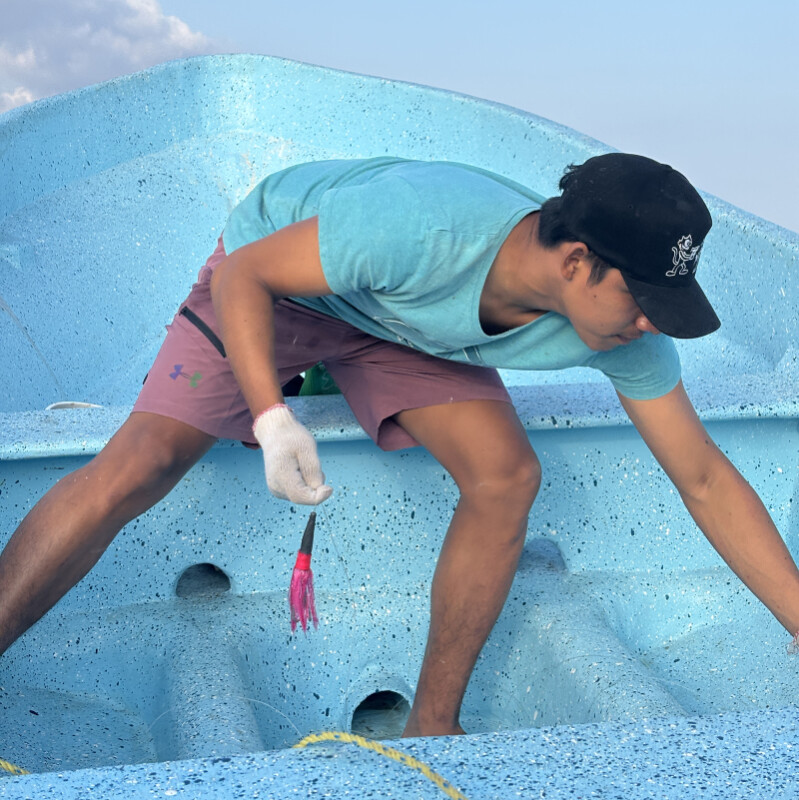
Fishing starts immediately. Going about half throttle, maybe 7 knots, Rene Sr. and Rene Jr. break out four handlines that consist of about 40 yards of heavy mono wrapped around a flat board the size of an iPad mini. A swivel connects the heavy line to a thinner leader and jig: a bundle of fluorescent pink hair emanating from a four-ounce conical lead weight covers a double hook. They toss jigs into the water and let the mono pay out behind the boat. Rene points to one of the lines, and then points to me. That one is mine. We’re after skipjack, birrelete they’re called here. Just two miles off the coast, they run small, about 6 pounds tops.
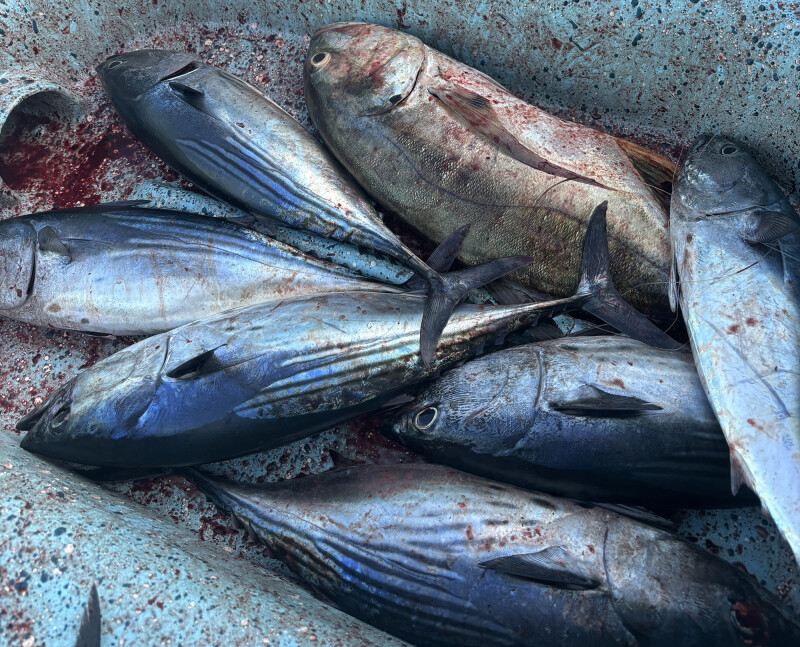
In this hour at dawn, they come up from the depths and chase the Hernandez’s hot pink jigs. It’s not long before they slam us. The lines that have been trailing somewhat slack behind the boat are all stretched tight and straight as laser beams. Young Rene rapidly hauls one in, the mono piling up at his feet, and soon a fish appears, a small tuna with a dark blue back and dark blue stripes along its flanks. He tosses it into the boat, where it flaps hard. “Birralete,” he says to my son, who stares at the bleeding fish. On the opposite side of the boat, Rene Sr. lifts a Pacific crevalle jack (Caranx caninus) over the rail, and my son watches amazed as young Rene whacks it on the head. “Jurel,” he says to my son, the Spanish name for it.
While all this transpires, I pull my line in. It feels like a big fish at first, but as it comes to the surface and starts to skip over the wave tops, it lightens up. Still, the mono bites into my hands that have gone a bit soft from typing and are protected only by thin cotton gloves.
We are landing fish as fast as we can get the lines back in the water, and it looks like it might be a productive day shaping up. But after 20 minutes of intense fun, the lines remain slack, with only the occasional bite. My son looks up at me, smiling, his face splattered with fish blood as the skipjacks splash around in the middle of the boat. He holds our line in his little hand, ready to announce a bite; this is his contribution to the cause. It’s all he can do, but it makes him part of the team.
We are hungry for more fish, and Rene Sr., standing on the after thwart, looks around for signs of fish: birds wheeling above the surface or the splash of baitfish getting chased up out of the water. Instead, we get dolphins. At first, they are just showing a fin arcing up out of the sea briefly, but then one and another vault clear of the surface and dive in again with a little tail flutter, all to my son’s delight.
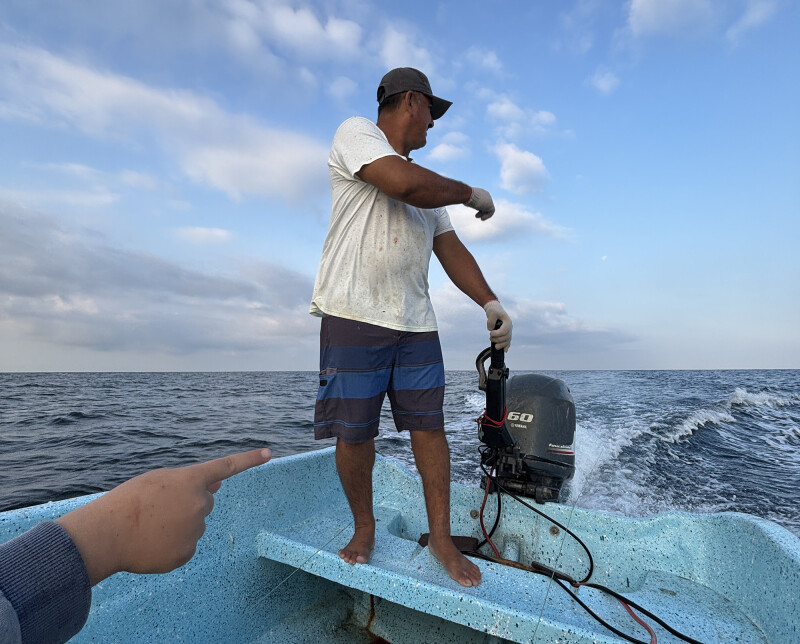
Rene Jr. begins prospecting. He breaks out a fifth handline, whirls the jig over his head, and casts it out to the side of the boat, hoping to lure a school in as the jig slips in behind us. No such luck. He accidentally tangles a shearwater, but it gets clear of the line before it gets hooked.
“Un delfín muerto,” calls Rene Sr. A dead dolphin. He heads towards it, and we see it bobbing on the surface upside down, its pectoral fins reaching above the surface. How did it die? We don’t know.
By 8:30, Rene Sr. has had enough. We haven’t had a bite in the last 15 or 20 minutes. “They’re not hungry today,” he says in Spanish. Nonetheless, he leaves the lines out most of the way home, ever hopeful. But to no avail, and as we approach the harbor, he hands me one of the small boards to reel in my line.
“How many?” Rene asks his son.
“Thirty-three,” says Rene Jr., almost all caught in the first half hour. “Y un jurel.” One crevalle jack.
“We get paid by the fish,” says Rene Sr. “About 30 or 40 pesos per fish.” (Twenty-five cents per fish tops.) “So this is nothing, barely enough to pay the gas.”
“On our best day, we had more than 800 fish,” says young Rene. “That’s our record. We filled the entire middle of the boat and part of the front section.”
Rene Sr. motors in toward the beach and turns the boat stern to. He lets the waves carry us in and then jumps out to pull us aground. Rene Jr. starts grabbing fish, fish or six at a time with the tails between his fingers. Instead of carrying them to the fish house, he puts them into his grandfather’s boat, which has come in ahead of us. They will sell together.
Mom is waiting on the beach for her precious boy, somewhat horrified by the blood all over him and stories of dead dolphins and fish getting beaten on the head, but he is so happy it doesn’t matter. This is how we begin with our children on boats, and it’s happening all over the world.