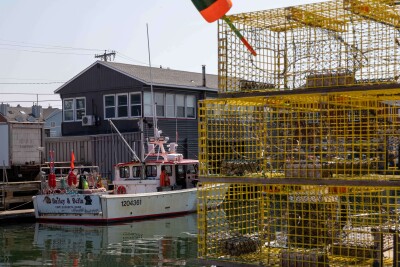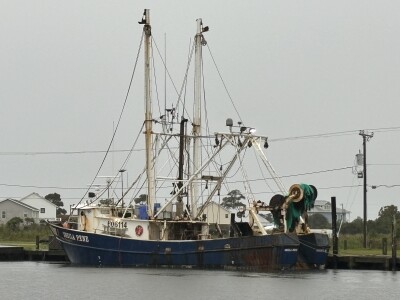
Most fishing vessels have a pair of binoculars aboard, the type and quality varies with their needs.
Old skippers once used telescopes to search for their dories scattered over the banks. The advantage of mounting two of them together to make binoculars seemed obvious, but with everything crafted by hand, the cost would have been too high. They held to their cycloptic technology until the early 20th Century, when the quality and price of binoculars combined to make them the preferred option for looking across the long distances of the sea, and the telescope largely disappeared from the wheelhouse.
Fishermen now have access to many options for high-quality binoculars that, in real dollars, come at a fraction of the cost of the old telescopes. Quinn Phillips, who crabs off Oregon, pots for black cod in the Aleutians, and tends salmon boats in Prince William Sound, uses Sig Sauer image stabilizing binoculars, and he can’t say enough good about them. “A friend told me about them, and I bought them online,” says Phillips. “I originally bought them for deer hunting. But then I took them on the boat, and the image stabilization is crazy. It keeps what you’re looking at steady, no matter how you move or the boat moves, and they’re great in low-light situations.”
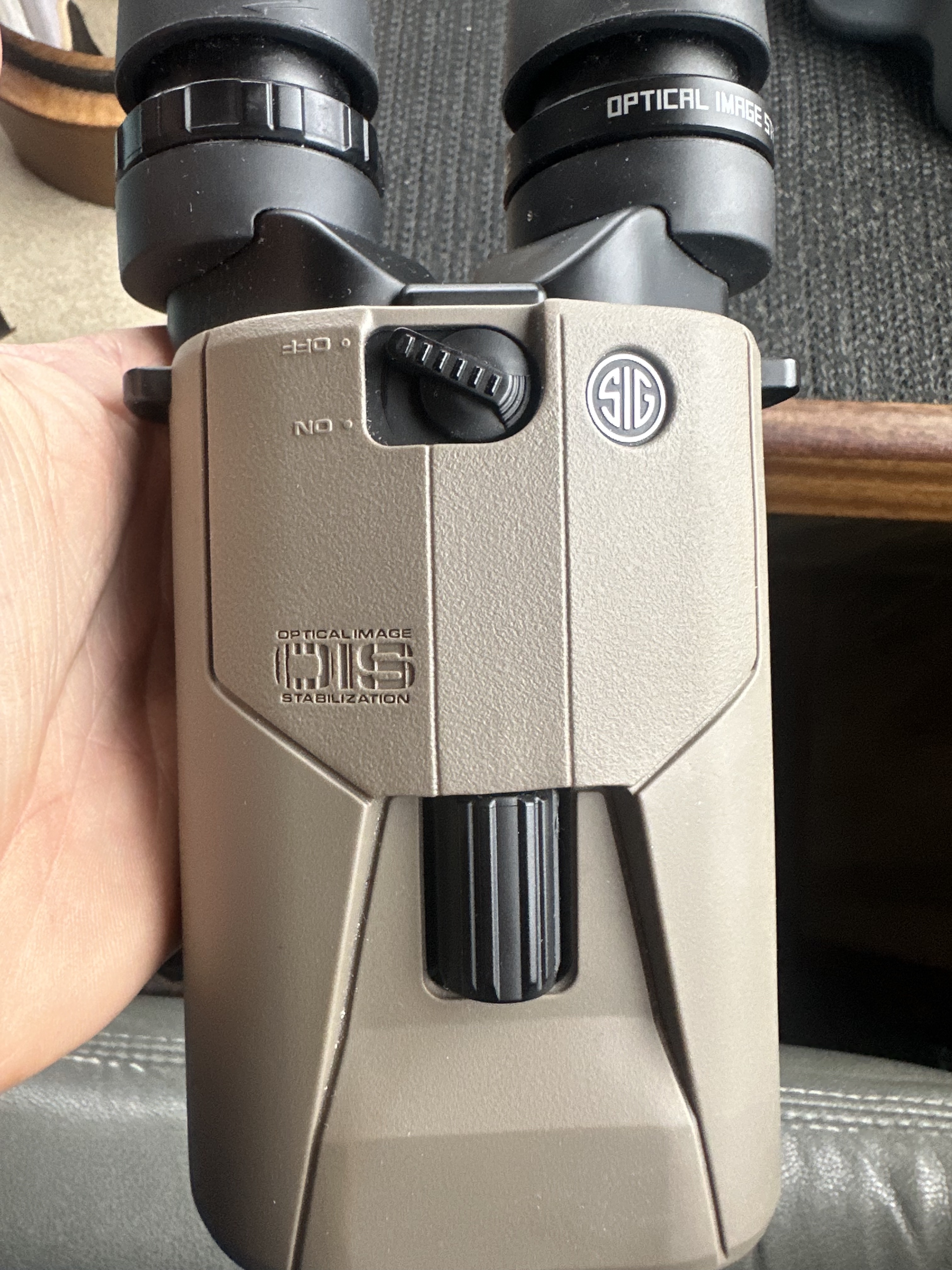
In terms of improving his production, Phillips uses his Sig Sauers primarily for finding buoys—bags, in the parlance of Alaska longliners. “I use them for spotting bags,” he says. “But I also use them to see other boats, and boat traffic, shipping, and tugs, and a nuclear submarine once. I also use them for looking at wildlife on the shore. I’ve shot a few videos through them. I made one of a mountain goat and its kid.”
Although he has another pair of regular binoculars on board, Phillips notes that they are gathering dust. “The Sig Sauers are way cooler. With them, there’s no shaking, no rolling, no vibration. To be honest, I can’t even pick up my old ones. The Sig Sauers are so good they make you want to pick them up to look at stuff.” He notes that while the Sig Sauer binoculars require a battery, they have proven to be energy efficient. “They use a single AA battery. I put one in back in February and still haven’t changed it, and that’s with daily use.”
Sig Sauer has numerous options for image-stabilizing binoculars. Phillips uses the ZULU6 HDX 16X42MM binoculars, which sell on the Sig Sauer website for $1,099. Their key features—which they share with others in the Sig Sauer line—include two modes of optical image stabilization, HDX-Glass to enhance light transmission, a scan mode, and a target mode. The target mode is designed specifically for locking onto a target and, according to the Sig Sauer product description, can increase stability up to 50 percent.
Chatting with Andy Straley online, he says Fujinons are his choice when he’s crabbing in the Bering Sea. “I got them in 1990 in Kodiak,” says Straley, which says something about their durability. “They are the best glasses on the boat. They’re heavy, but they give you a good shot, and they work well in low light.”
Fujinon binoculars are made and sold by Fujifilm, and the company’s website offers a crash course in binocular basics here. The two numbers associated with binoculars, it explains, represent the magnification of the binoculars and the diameter of the objective lenses, the large lenses on the front of the binoculars. “Using 8x binoculars makes an object appear the same size as it would if viewed with the naked eye from 1/8th of the distance,” says the Fujifilm website, noting that the second number is the diameter in millimeters of the objective lens; the larger the number, the larger the field of vision. The web page also includes information on prisms, focus mechanisms, and stabilization mechanisms.
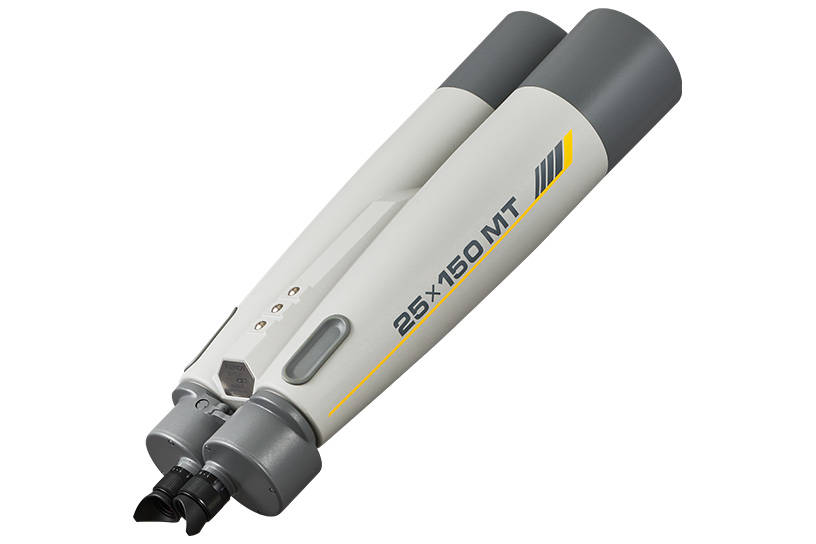
"The Fujinon image stabilizing system is completely different from the Sig Sauers,” says Anthony Osterberg, vice president of Baker Marine in San Diego. “I sell a lot of Fujinons to the tuna purse seiners,” says Osterberg. “They use the 25x150 MT-SX model. Those weigh 45 pounds. Fishermen call those the big eyes. They usually mount them up in the towers 40, 50, or 60 feet up and use them to look for birds. Up there, the horizon can be 20 miles out.” According to the Fujinon specifications, the big eyes don’t use image stabilization.
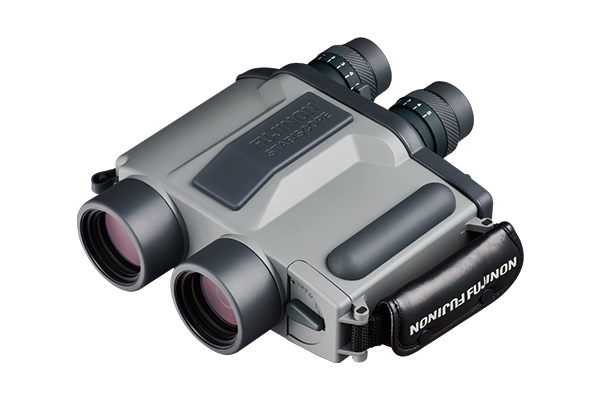
Fujinon’s unique image stabilization comes into play when the purse seiners use helicopters to spot fish. Osterberg notes that when flying, spotters use the Fujinon Stabiscope binoculars, which weigh 4 pounds. “Those have the full-on gyro spinning at 14,000 rpm and cost $5700.”
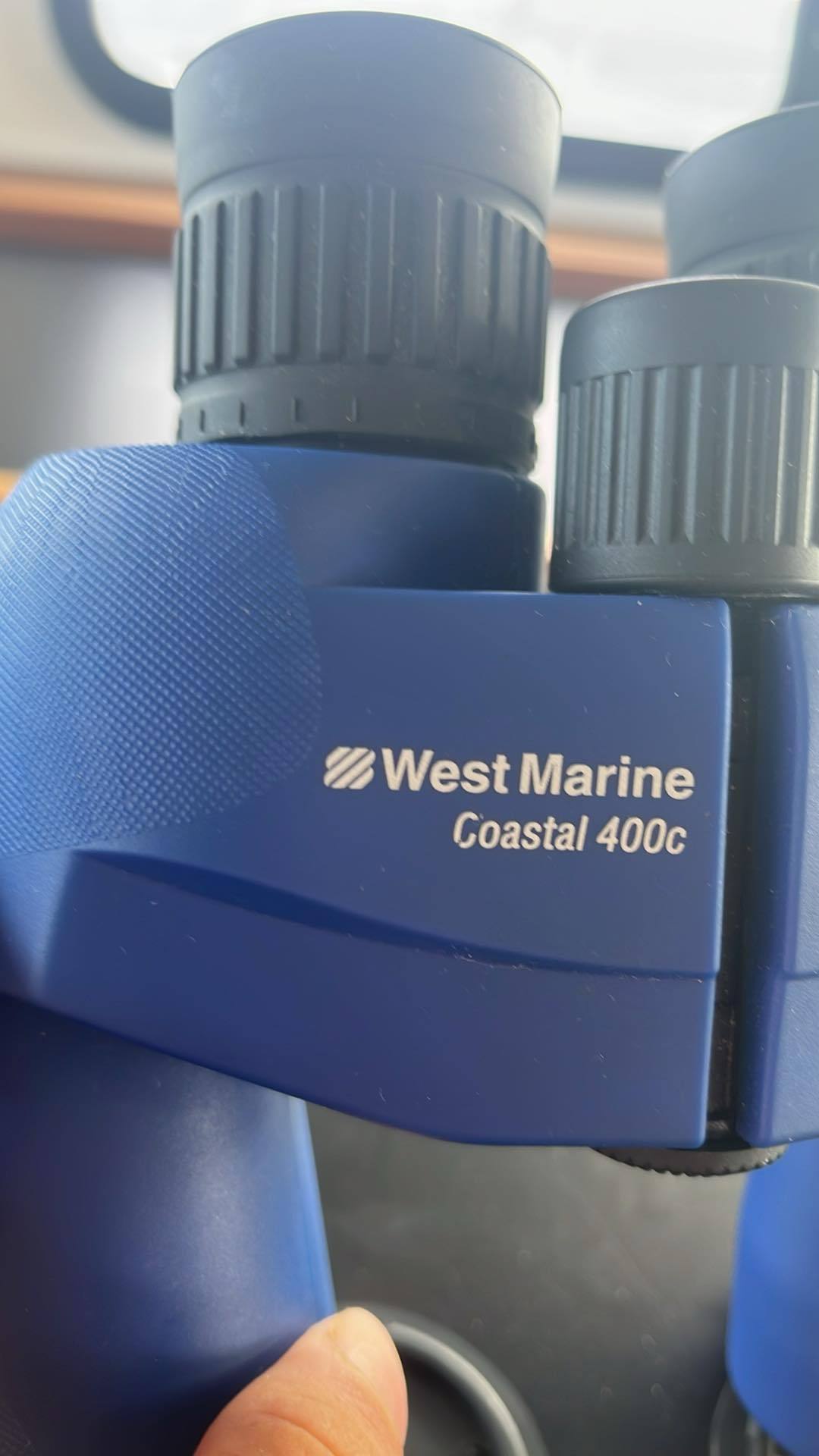
While guys like Quinn Phillips and Andy Straley are sold on image-stabilizing binoculars and are likely never going back, others, like Maine lobsterman Ethan Whitaker, take a different tack, treating binoculars as disposable tools. “We use them for finding our gear and also looking at an area when we’re shifting gear into it,” says Whitaker. “I haven’t bought a nice expensive set because we always seem to drop or break them somehow,” Whitaker notes that he buys Nikon, Pentax, and other lower-priced brands, and those serve him well enough.
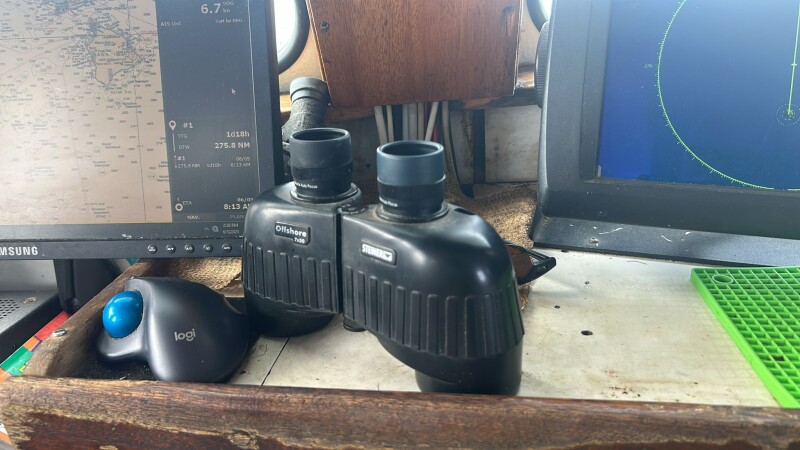
Pacific tuna fisherman Jeremy Brown prefers higher-quality old-fashioned binoculars. “I’m very happy with my Steiners,” says Brown. “The only thing I say is don’t let the crew touch them. There are two rules on this boat: don’t touch the skipper’s binoculars and don’t tap the barometer.” To prevent anyone from messing with his adjustments, Brown adds that he’s considered putting super-glue on the eyepieces so they can’t be moved.
"I mostly use them for spotting birds,” Brown says. “You can tell sometimes by the way the birds are acting if there’s fish there. Tuna are surface feeders. If you see the birds feeding you chase’m. It doesn’t always work out, but it’s something to do.”
As is common, Brown also uses his Steiners for safety, keeping an eye on the movements of nearby vessels. “I tried those image stabilizing binoculars, but I thought the field of vision was too narrow. I forget what brand I tried. I looked at the Fujinons but they were too expensive.”
Price is important for Brown, who notes that he has gone through a few pairs of Steiners because they get dropped and broken, but the Steiners aren’t exactly cheap. “The good ones cost around $400,” says Brown. “Maybe more.”
According to Steiner, the 7x50 binoculars that Brown uses are the civilian version of the company’s military binoculars, and they rely on a wide field of vision to provide a steady image. They utilize a flexible silicone lens mount, designed to absorb severe shocks, impacts, and abuse without sustaining damage. The Steiner focus system enables users to adjust each eyepiece to their vision just once, “ensuring razor-sharp images from 20 yards to infinity,” says the Steiner. While the housings of the Steiner binoculars are built tough of polycarbonate with NBR Long-Life rubber armoring, they can still sustain damage. “What I like is that you can replace the eyepieces if they break,” says Brown. “Also, they’re great in low light.”
When he spoke, Brown was aboard his 80-foot albacore troller, the Betty H., steaming back to Honolulu from a research charter in Fiji. “When we get back, we’ll head north from there and see if we can run into some tuna. I’d like to get one of those bird radars someday,” he says. “But for now I have my binoculars.”
The dories are gone from the banks, and the telescope is gone from the wheelhouse. But seafarers still need a tool to search the distant waves, and their range of choices of binoculars has grown with their varying needs.