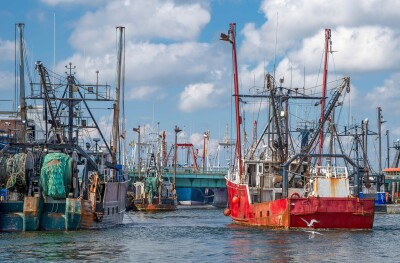
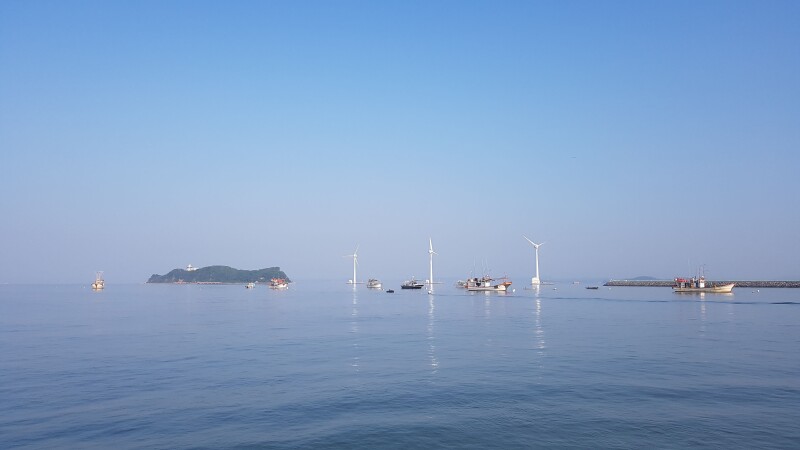
Across every U.S. coast, there is a push for a changing horizon. Towering turbines and wave-energy buoys could steadily multiply in the same water where generations of commercial fishermen have hauled gear.
What began as pilot programs in the Northeast and Pacific Northwest has expanded into full-scale federal-led rounds off Massachusetts, New York, California, and the Gulf of Maine, marking a new era of ocean use and industrial overlap.
Supporters call it a long-overdue step towards decarbonizing America’s energy supply, but for commercial fishermen, it’s a shift that could rewrite where and how they make their living.
As the push for clean energy accelerates, offshore wind and wave projects are becoming a growing presence along the U.S. coastline. While these developments aim to reduce greenhouse gas emissions, they also bring new challenges to fishermen working in already crowded and heavily regulated waters.
According to the Energy Transition for the U.S. Commercial Fishing Industry: Technical and Operational Advisory, a September 2025 report supported by the U.S. Coast Guard, Alaska Marine Safety Education Association (AMSEA), Washington Maritime Blue, and the CDC’s National Institute for Occupational Safety and Health (NIOSH), and led by the American Bureau of Shipping (ABS), offshore renewable energy installations (OREIs) “present external risks to commercial fishing vessels and crews” including “changes to fishing areas, longer transit times that contribute to fatigue, increased vessel traffic, and a heightened risk of collisions, allisions, and groundings.”
As turbines and wave structures expand across traditional fishing grounds, ABS researchers note that “offshore renewable energy installations can disrupt vessel radar systems and complicate navigation,” especially when existing navigation aids don’t include OREI data.
Construction and maintenance work can also disrupt traffic patterns and temporarily close transit lanes. The Operational Advisory warns that “inadequate lighting and marking of OREI structures may lead to accidents,” a critical concern for captains operating in fog or low-visibility conditions.
In addition, search and rescue operations face new obstacles. The report explains that restricted maneuverability in OREI zones can “hinder vessel assistance and delay response times during emergencies.” That delay could be the difference between life and death in a man-overboard or mechanical failure situation offshore.
Training of the fleet for a new seascape
The Advisory urged the development of comprehensive training programs for fishing crews operating near offshore energy projects. ABS emphasizes that these programs should include navigation, emergency response, and search and rescue operations in OREI environments, not just for vessel operators but also for shore support personnel.
ABS also calls collaboration among regulators, vessel operators, and maritime educators, such as AMSEA. AMSEA’s role includes helping assess how new technologies are likely to be used aboard commercial fishing vessels and facilitating outreach to the industry.
Keeping fishermen in the conversation
Collaboration may be the most critical piece of the puzzle. Fishermen from the Gulf of Maine to the Bering Sea are calling for stronger seats at the table as new offshore wind and wave projects take shape. In regions like southern New England, fleets have already seen firsthand how survey work and cable-laying can interfere with trawl routes and gear sets. Many have raised concerns about compensation, safety zones, and communication gaps during construction.
The ABS Advisory echoes those concerns from a technical view, emphasizing the need for enhanced communication protocols, updated nautical charts, and remote monitoring technologies to reduce navigational and safety risks near OREIs. For fishermen, this means clearer radio channels, better chart integration of turbine arrays, and consistent updates from operators when transit corridors change.
Beyond safety, there’s the economic reality of navigating these new obstacles for fishermen. Longer runs around lease areas mean higher fuel costs and more time at sea. As the report states, these changes can “contribute to fatigue” and cut into margins for small-boat operators. With diesel prices volatile and fuel efficiency already under scrutiny in the push toward low-carbon propulsion, every extra mile does matter.
Balancing what's offshore
ABS’s research is part of a broader national effort to identify how decarbonization goals can move forward without compromising crew safety. The same report outlines future fuel transitions from hybrid-electric propulsion to hydrogen and ammonia systems, noting that the fishing fleet faces “unique risks such as thermal runaway, flammability, toxicity, and cryogenic exposure” when adopting new fuels.
In that sense, the offshore energy boom represents both a challenge and a solid case study. As vessels adapt to operating amid wind farms, they’ll also need to adapt to carrying new energy systems of their own. Safety training, stability calculations, and maintenance routines will all need to evolve in parallel with the new landscape of the sea.
The Transition Advisory concludes that the commercial fleet can safely coexist with offshore wind energy development, but only through proactive planning. The means updating regulatory frameworks, improving emergency preparedness, and ensuring fishermen receive specialized training for navigation and stability in OREI environments.
For those on deck, the view is more immediate. Every new tower represents both a symbol of progress and a potential obstacle. For coastal communities built on fishing, the stakes are far beyond sightlines- they touch safety, livelihood, and tradition.
As the next phase of offshore energy is mapped out by state and federal agencies, fishermen continue to ask the same question that has guided them for generations- how do we work with the sea, not against it?
.png.small.400x400.png)