The first evidence of a European green crab in the northern Whidbey Basin was confirmed in late September after a volunteer found a crab molt at Similk Beach on the Swinomish Tribal Reservation in Washington state.
The molt was discovered by community member Shirley Hoh during a routine Molt Search survey. Molt Search, launched in 2023 by the WSG Crab Team and Washington State University Extension, is a volunteer early-detection program that trains beachgoers to identify shed crab shells. It supplements traditional trapping, which is effective but labor-intensive and cannot cover every shoreline.
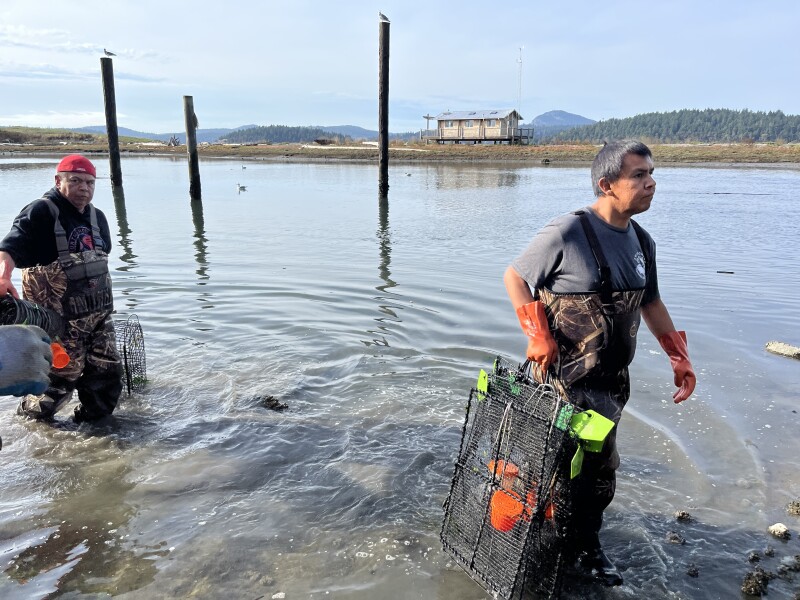
After Hoh reported the find through the Molt Search app, WSG Crab Team, the Washington Department of Fish and Wildlife (WDFW), and biologists from the Swinomish Indian Tribal Community (SITC) coordinated a rapid trapping response. “We found a concerning number of European green crabs,” says Emily Grason, WSG Crab Team program lead. The size of the captured animals suggested the invasive crabs had been present for several years. SITC subsequently led additional efforts, and a total of 12 crabs were trapped across three Skagit Bay sites.
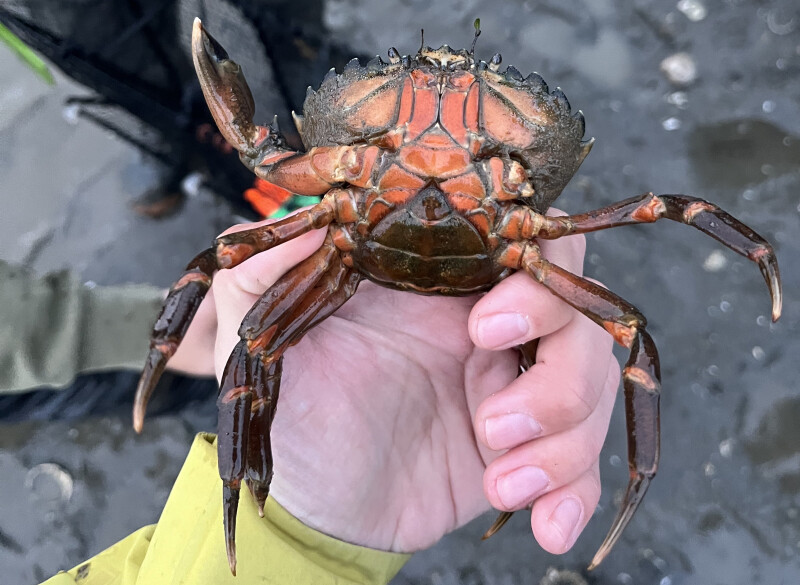
The detection highlights both the continued spread of the species — which has disrupted ecosystems and shellfish resources worldwide — and the effectiveness of the new volunteer program. “This is exactly what Molt Search was designed to do — fill in the places where people aren’t currently trapping for green crab, and leverage other ways of looking for evidence that green crab might be there,” Grason says.
Crab Team, created in 2015 to meet a WDFW monitoring mandate, has a long history of partnering with agencies and Tribes for early detection and management of green crab populations. While trapping remains the most sensitive detection method for small populations, its logistical demands leave unmonitored gaps along the shoreline. Molt Search is intended to close those gaps. “Molt Search’s simple protocols enable hundreds of community members to build on the efforts of managers and trappers also looking for green crab across Washington shorelines,” says Lisa Watkins, WSG community science specialist.
The Skagit Bay discovery came less than two months after the Tulalip Tribes found a green crab at Mission Beach in Possession Sound, the first detection in the southern Whidbey Basin. A follow-up “trapping blitz” involving 110 traps found no additional crabs there.
The northern basin detection was nonetheless unexpected. Grason noted she previously believed the region was more protected because of the narrow passage at Deception Pass. “It turns out that crab larvae coming into the Strait of Juan de Fuca can get shot right through Deception Pass,” she says, citing information from Swinomish researchers studying Dungeness crab. Molt Search protocols were adapted from that tribal research, which itself drew on Crab Team methods.
SITC has long collaborated with Crab Team by providing access to reservation sites and assisting with gear and field support. “SITC Fisheries Department staff knew that green crab would eventually reach our shores, but it was still disheartening to catch those first few crabs,” says Talia Davis, a fisheries technician with the Swinomish Tribe. “Fortunately, WSG Crab Team and WDFW responded quickly and worked alongside us for our first large-scale trapping event. Their combined green crab knowledge and on-the-ground expertise have been invaluable as we navigate these new detections.”
The Whidbey Basin findings align with an overall increase in green crab observations across inland Washington waters in 2024. Biologists attribute the trend partly to El Niño conditions that favored strong population growth, as well as new detections in areas such as Port Gamble Bay and central Hood Canal.
Officials say the latest discoveries underscore the need for diverse detection and management tools and show that Molt Search is already playing an important role.