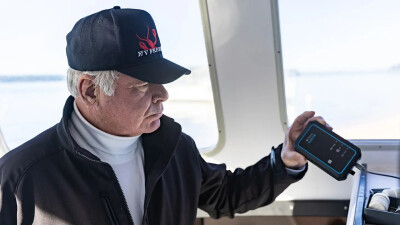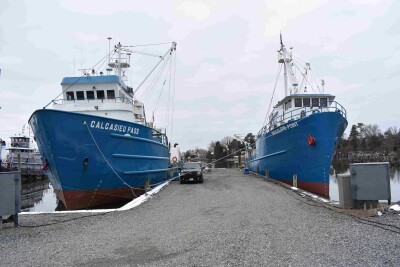
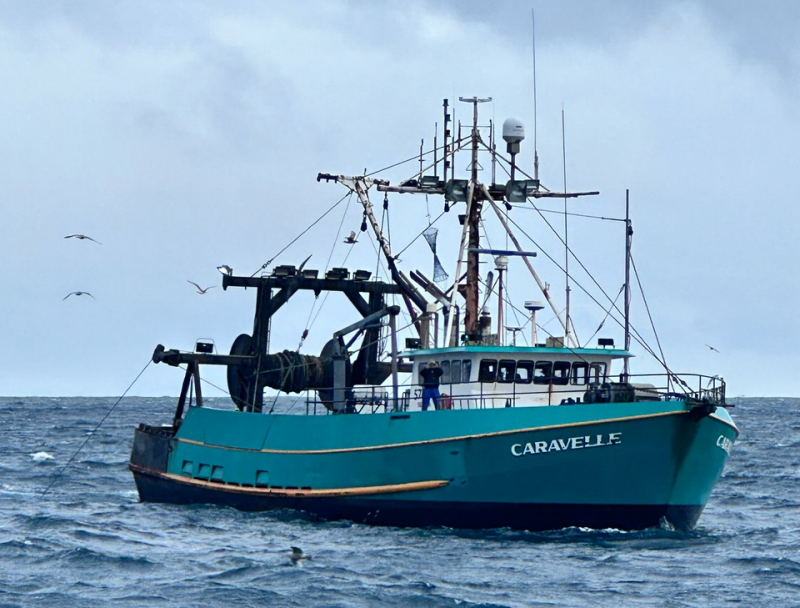
Electronic monitoring (EM) of commercial fish harvests, which dates back to pilot programs and testing of EM in the 2010s, is being fully embraced these days by trawlers in the Gulf of Alaska.
Ninety-five percent of trawlers in the Gulf of Alaska are using EM these days, according to Julie Bonney, executive director of the Alaska Groundfish Forum in Kodiak.
The program provides for accurate collection of data on the catch, bycatch, and fishing effort — information used to improve fisheries management.
It also frees the vessel captain of the cost and responsibility for the safety of having a human observer on board, said Paddy O'Donnell, president of the Alaska Whitefish Trawlers Association in Kodiak.
It's a bit of a challenge at times with a human observer, dealing with the logistics of flight delays and weather issues in getting the human observers to the vessel, said O'Donnell, now in his 36th year of commercial fishing in Alaska. In addition, "human observers are getting scarce. People just don't want to work anymore," he said.
EM cameras on board offer enhanced accuracy over traditional logbooks, increased transparency, improved traceability, deterrence of illegal activities, and overall better protection of non-targeted species. EM also helps to identify and reduce bycatch, the unintended harvest of non-target species.
EM on-board cameras, GPS receivers, and gear sensors record fishing activity, harvest, and vessel location for later analysis. The cameras capture video of activity on deck while fishing gear is in use, with data stored on a hard drive that is used for review.
The EM program for Alaska groundfish fisheries was developed in stages, beginning with the strategic plan for electronic monitoring and electronic reporting in the North Pacific in 2013 to guide integration of monitoring technologies.
In 2014, an EM workgroup was established by the North Pacific Fishery Management Council (NPFMC) to develop an EM program as part of the observer program.
In 2015–2016, a pilot project was launched for the automated video analysis system on a variety of vessels. In 2017, regulations were implemented to integrate EM into the North Pacific Observer Program, particularly for non-trawl vessels. In 2018, the NPFMC initiated steps to implement EM as a monitoring tool in the partial coverage category for fixed gear vessels.
By 2020, the EM program for pelagic trawl pollock catcher vessels began operating under an exempted fishing permit, and by 2025, full implementation of the EM program for pelagic trawl pollock catcher boats and tender vessels delivering to shoreside processors was scheduled.
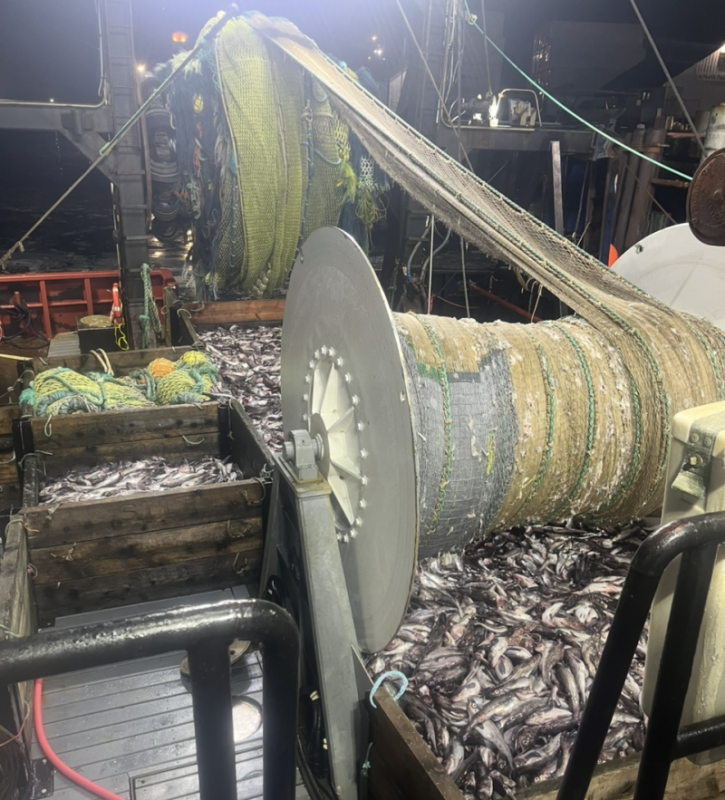
In May of 2025, the Fisheries Monitoring and Analysis Division of the Alaska Fisheries Science Center in Seattle presented NPFMC with its draft 2024 annual report of the North Pacific Observer Program. The NPFMC is scheduled to review the observer 2026 annual development plan at its October meeting in Anchorage.
The observer program for the North Pacific is the nation's largest fisheries observer program, covering vessels in both partial coverage and full coverage fisheries.
The 2025 report notes that NMFS plans to continue to collaborate with industry partners on EM development and efficiency projects. NMFS is tasked with working with the council’s monitoring committees to coordinate on EM development priorities and grant proposals to the National Fish and Wildlife Foundation.
A combination of sources was the initial means of funding for EM equipment, including NOAA Fisheries' Fisheries Information Systems and National Observer Program (FIS/NOP) and the National Fish and Wildlife Foundation (NFWF), a congressionally chartered foundation.
NFWF's Electronic Monitoring and Reporting (EMR) grant program, beginning in 2015, specifically focuses on integrating technology into fisheries data collection and management. The EMR program receives major funding from NOAA, the Walton Family Foundation, and the Kingfisher Foundation.
Fishermen and fishing organizations also help fund EM programs through vessel-level payments for equipment, technical support, and video review. In some cases, industry fees associated with Limited Access Privilege Programs (LAPPs) also contribute to covering the costs of EM activities.
Observer coverage for the partial coverage vessel category is funded through a system of fees based on the ex-vessel value of groundfish and Pacific halibut, with potential supplements from federal appropriations. The observer fee is assessed on landings accruing against a federal total allowable catch (TAC) for groundfish or a commercial halibut quota made by vessels subject to federal regulations and not included in the full coverage category.
O'Donnell noted that his vessel fee is assessed at 1.65% of the ex-vessel value on landings subject to the fee. "Out of that the vessel pays 50% and the processing plant pays 50%, so it doesn't cost the boat as much as a human observer," he said.
Costs associated with vessels required to have full observer coverage are paid by the commercial fishing industry directly to certified observer providers.
The Alaska Fisheries Science Center report to NPFMC in May notes that overall costs of observer coverage in full coverage trawl catcher vessel fleets have been greatly reduced by participation in trawl EM.
Since 2019, there has been a 33% decrease in the number of billed vessels and plants, a 26% decrease in the number of filled full coverage days, a 23% decrease in total case costs, a 14% decrease in total incidental costs, and a 22% decrease in fully loaded costs to the fleet, the report said.
EM costs overall are dependent on the number of vessels participating in the EM program, the number of systems that need to be purchased and/or replaced on an annual or recurrent basis, deployment rates, field support services, video review, and other factors, the report said.