

An international team of fisheries scientists studying data gathered during the oceanic winter of 2022 in the Northeast Pacific Ocean has identified distinct ocean biomes impacting the marine survival of Pacific salmon species.
Their report, based on an ecosystem-wide environmental DNA (eDNA) survey across 2.2 million square kilometers of open ocean habitat, found that salmon exhibited species-specific distribution across the Northeast Pacific. These distributions were associated with swirling ocean currents known as mesoscale anticyclonic eddies—currents that rotate clockwise in the Northern Hemisphere and counterclockwise in the Southern Hemisphere, characterized by a high-pressure center. These eddies play a significant role in ocean circulation by transporting heat, salt, and other properties, and by influencing biological activity.
Ocean biomes are aquatic ecosystems characterized by saltwater and include the Pacific Ocean, the largest and deepest of the world’s oceans, known for its diverse marine life and volcanic activity.
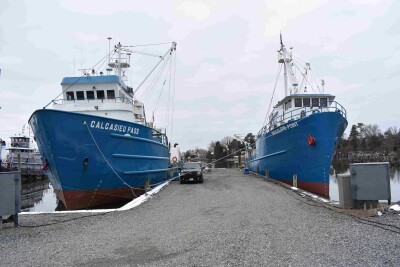
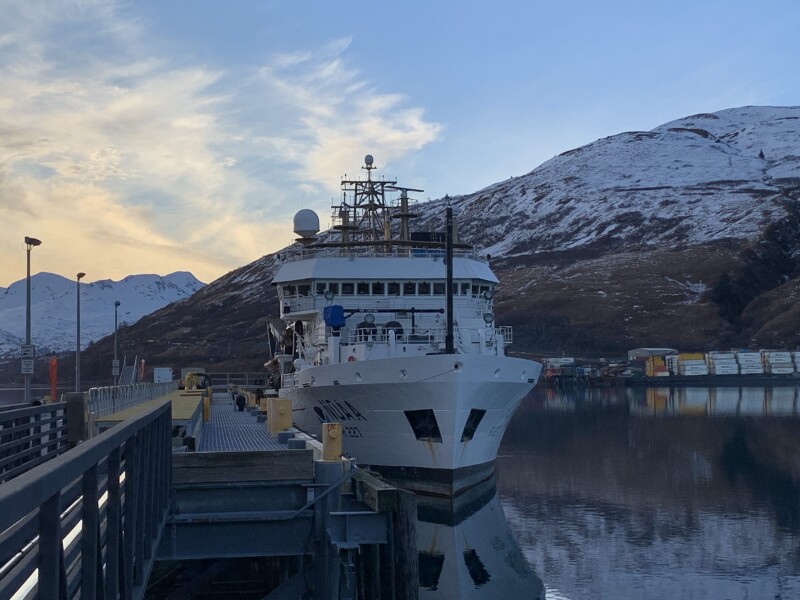
The voyages, part of the International Year of the Salmon initiative, began in 2017 and concluded in 2022, though analysis of the collected data continues. These voyages were a collaborative effort involving the North Pacific Anadromous Fish Commission (based in Vancouver, Canada), the North Atlantic Salmon Conservation Organization (based in Edinburgh, Scotland), and various other organizations across multiple countries. Their goal was to raise awareness about the importance of salmon conservation.
This latest research report was published on July 8 in the ICES (International Council for the Exploration of the Sea) Journal of Marine Science.
Researchers concluded that salmon displayed species-specific positive associations with potential prey species and competitors. However, some salmon were negatively associated with specific cnidarians and harmful algae. Cnidaria are a group of aquatic invertebrates found in both freshwater and marine environments, ranging from jellyfish, sea anemones, and corals to some of the smallest marine parasites.
The report noted that the localized onset of spring phytoplankton blooms led to a rapid transition in ecosystem composition within weeks — from copepod-dominated winter communities to more complex communities including forage fish and higher trophic levels. These higher levels include all salmon species, as well as apex predators — organisms at the top of the food chain that have no natural predators, such as killer whales and great white sharks.
This bloom community was composed of members of both open ocean and coastal biomes, forming a hybrid ecosystem. This suggests that mobile species were migrating in a targeted manner to areas of high biological activity. Researchers documented that salmon navigate through distinct biomes in a species-specific manner over the oceanic winter, at an unprecedented taxonomic and spatial scale. They identified key species with which the salmon interacted and observed rapid temporal transitions in ecosystem composition associated with spring bloom onset, increasing understanding of salmon ocean ecology.
Pacific salmon are considered a foundational species in the marine ecosystem of the North Pacific. They support valuable commercial fisheries and are culturally significant to Indigenous peoples.
Factors limiting salmon survival in freshwater and coastal margins are relatively well understood. Climate change, food limitations, habitat degradation, loss of genetic diversity, overexploitation, pathogens, and predation are considered the primary influences on their survival.
Each year, several billion hatchery pink and chum salmon are released into the ocean by Alaska, Japan, and Russia. As a result, the overall salmon biomass in the North Pacific is estimated to be at an all-time high. However, the open ocean's carrying capacity to support this biomass remains poorly understood. Specifically, the report noted that the artificially high abundance of pink salmon may dramatically impact entire ecosystems and reduce the productivity of co-localized migratory salmon species — paradoxically leading to population declines during a time of unprecedented overall salmon abundance.
Historically, the marine survival of salmon has been associated with large-scale oceanographic cycles like the El Niño–Southern Oscillation (ENSO) and the Pacific Decadal Oscillation (PDO). However, these historical correlations appear to have broken down over the last decade, as climate change–driven marine heatwaves have disrupted open ocean ecosystems.
It is still being debated whether the oceanic winter limits the survival of first ocean-winter juvenile salmon due to limited prey availability or whether other factors, such as predation, are more important.
The western and central North Pacific, studied for decades by Russian and Japanese scientists, is relatively well understood. However, comprehensive surveys of the Northeastern Pacific were limited prior to 2019.
The 2019 and 2020 winter expeditions into the Gulf of Alaska, launched by the International Year of the Salmon, focused on describing the distribution of Pacific salmon in the open ocean ecosystems of the Northeastern Pacific and identifying factors influencing their survival during winter. The 2019 expeditions used a multidisciplinary approach, incorporating physical oceanography and trawl surveys. These surveys documented the tail end of a historic marine heatwave, which saw unusually high cnidarian abundances and malnourished chum salmon.
In contrast, the 2020 expedition observed a return to presumed pre-heatwave ecosystem conditions and documented high salmon aggregations in the southeastern Gulf of Alaska. By sequencing nucleic acid traces left by organisms in the this environment, scientists were able to gain unprecedented insight into the "winter salmonosphere." eDNA data collected during this time revealed nekton (a diverse group of aquatic animals that can actively swim against currents) and zooplankton communities, comparable to those identified using conventional methods such as trawls and zooplankton hauls.
The eDNA data detected diurnal vertical migrators — species such as lanternfish and squid that move up and down the water column daily. These micronekton, which include crustaceans, cephalopods, gelatinous organisms, and fish, were detected more frequently at night when they were nearer the ocean surface. Additionally, large, elusive predators such as sharks and marine mammals, which are often undetected by conventional methods, were readily identified using eDNA, according to the report.