

On July 3, the U.S. House narrowly passed the One Big Beautiful Bill Act, sweeping federal legislation that extends tax cuts and reduces social safety net programs. President Trump signed the bill into law during a ceremony held the following day.
For coastal fishing communities endeavoring to protect access to their fisheries and fisheries habitats, efforts to deal with the legislation remain a work in progress.
One possible saving grace was that before it went to the House, Sen. Mike Lee, R-Utah, dropped from the H.R. 1 package in the Senate a contentious plan to sell between 2.2 million and 3.3 million acres of public lands in 11 western states for the construction of housing.
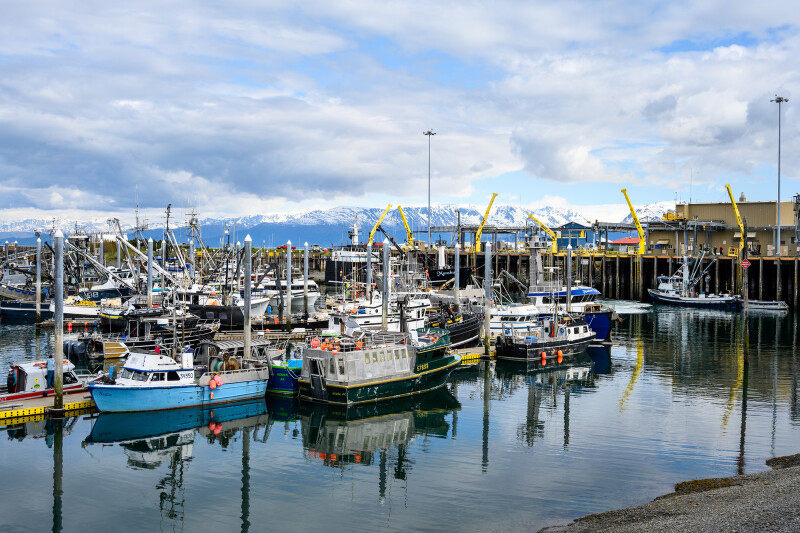
"Public land sales or privatization could cut off lifelines to water, or at the very least, create disruptive and unnecessary uncertainty," said Michelle Stratton, a fisheries scientist and executive director of the Alaska Marine Conservation Council in Anchorage. "Without reliable public access to harbors, fish camps, and boat ramps, especially on or near federal lands, Alaska's small boat fishermen can't operate or know how to prepare for their season."
Stratton, who grew up set netting on the west side of Alaska's Cook Inlet, notes that commercial harvesters use federal lands to access fishing and hunting resources, as well as other traditional food sources. "Beyond access, there's also concern for habitat integrity should sales or leases result in development," she said. "But until we understand what and how much land use could change, we can only speculate on the impacts."
Commercial fishing interests are also eyeing National Environmental Policy Act (NEPA) measures in the multitrillion-dollar bill that could potentially weaken environmental protections.
Conservationists contend these could include expanded use of "categorial exclusions" for projects, potentially removing public oversight. Weakening NEPA and habitat protections to expedite oil and mining projects may backfire, particularly if cutting corners results in increased risk and correlated higher costs, greater delays, and ecological harm," Stratton said.
Rep. Nick Begich, R-Alaska, who voted for the bill, praised the legislation for unlocking Alaska's resources and said the bill streamlines permitting and environmental reviews "to give stakeholders the certainty needed to invest and create high-paying jobs."
Begich described the package as "a transformative victory for Alaska," with benefits that include stabilizing rural health care and improving Medicaid services.
Both Medicaid and SNAP, the federal food stamp program, are critical safety nets for Alaskans and their families, including harvesters, and especially in rural areas, Stratton said.
According to Stratton, AMCC has had very positive and productive conversations with Begich and his staff recently, speaking specifically about fishing communities and habitats. AMCC believes that Begich will prioritize the interests of Alaskans and the state's marine resources in collaborating with his colleagues in Washington, DC, but that a key part of that will be Alaskans staying in contact with his office and consistently sharing their concerns, she said.
"This isn't just about fish; it's about access, livelihoods, reducing uncertainty and preserving our working waterfronts," she said. AMCC has been working with fisheries trade organizations, tribal groups, small processors, and coastal fishing groups nationwide to coordinate their overall efforts.
Stratton said that meanwhile the groundwork for weakened oversight is already happening simply through staff departures, vacancies and agency upheaval. "Budget cuts and process changes will only increase those impacts," she said.
In a statement issued by Begich's office on July 3, the congressman said both maritime and coastal communities would benefit from investments in the Coast Guard that are included in the bill, with over $20 billion provided to strengthen maritime safety and Arctic readiness.
Included in that package, he said, are critical infrastructure investments for docks, hangars, and shore facilities in Sitka, Seward, Kodiak, and St. Paul, enhancing response capabilities and supporting maritime communities.