Two Seattle area conservation groups say they intend to sue the federal government for failure to protect salmon, steelhead and orcas from hatchery programs.
The announcement from Wild Fish Conservancy (WFC) and The Conservation Angler (TCA) contends that the National Oceanic and Atmospheric Administration (NOAA) is funding and authorizing hatcheries in the Columbia River below Bonneville Dam under the Mitchell Act, relying on a flawed 2024 Biological Opinion that contains scientifically indefensible conclusions and violates the Endangered Species Act (ESA).
The Mitchell Act, passed by Congress in 1938, is intended to advance the conservation of salmon and steelhead fisheries in the Columbia River Basin. Mitchell Act funding has supported the establishment, operation and maintenance of hatchery facilities in Oregon, Washington and Idaho, as well as monitoring and evaluation of hatchery programs, screening irrigation intakes, and improving fish passage. NOAA Fisheries has administered the Mitchell Act since 1970, distributing funds to tribes and Oregon, Washington and Idaho to produce hatchery salmon and steelhead to support fisheries.
The ESA requires a 60-day notice period before citizens can file a lawsuit for certain violations such as failure of the U.S. Fish & Wildlife Service to perform a required action like issuing a decision on a species listing petition. This advance notice is to inform the potential defendant, such as federal government, of the alleged violation and give them opportunity to correct it before a lawsuit is filed. If the lawsuit is filed before the 60-day period expires, the court may dismiss the claim.
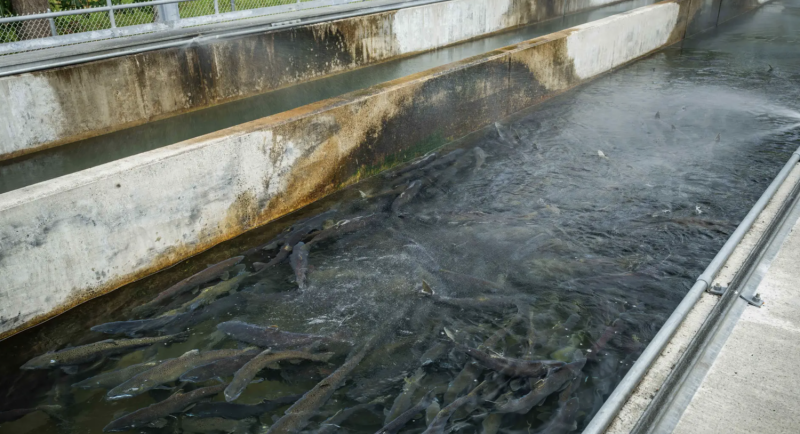
WFC and TCA allege that these hatcheries are harming threatened and endangered wild Chinook coho, chum steelhead and Southern Resident killer whales who rely on wild salmon for their long-term recovery. Harm to
ESA-listed species and their critical habitats occurs through a variety of ways, including genetic and ecological interactions, harvest impacts, facility effects, fish removal activities, and others, according to the two conservation groups.
The notice letter, announced on Sept. 12, was filed on Sept. 8 with Secretary of Commerce Howard Lutnick and Eugenio Pineiro Soler, assistant administrator of National Marine Fisheries Service.
WFC previously sued in an effort to close the Southeast Alaska troll salmon fishery.
In August of 2024 the Ninth Circuit Court of Appeals overturned a lower court's 2023 order to close that fishery, allowing it to continue while National Marine Fisheries Service corrects its National Environmental Policy Act (NEPA) documents. Then in May of 2025, WFC filed a new lawsuit to force a decision on its petition to list Gulf of Alaska Chinook salmon as endangered under ESA, after NOAA missed the deadline for a ruling. The latest WFC lawsuit alleges that climate change, hatcheries and fishing management practices contribute to the decline of Alaska Chinook salmon.
NOAA is currently in the process of reviewing WFC's petition to list Alaska Chinook salmon under the ESA.
The Alaska Department of Fish and Game maintains that the Southeast Alaska salmon fishery is not a primary driver of the decline of Southern Resident orcas and that WFC's allegations are misplaced. ADF&G maintains that other factors, including habitat loss, pollution and inbreeding within the Southern Resident orca population are more significant threats than the Southeast Alaska fishery.