

Rising toxins found in bowhead whales harvested for subsistence use by Alaska Natives on the North Slope show that ocean warming is resulting in higher concentrations of algal toxins in Arctic food webs, according to new research published on July 9 in the journal Nature.
Researchers at NOAA Fisheries' Northwest Fisheries Science Center in Seattle said this trend threatens food security for coastal communities who rely on marine life, including clams, fish and whales for food and other resources. Since learning of this threat to traditional nutrition, people in these communities
have asked researchers to help them continue to monitor the emergence of algal toxins in the Arctic ecosystems that they depend on.
People living in remote communities in northern and western Alaska rely on marine resources for nutritional and cultural well-being and now we are finding that these previously unknown factors mean these resources are at risk, said Kathi Lefebvre, a research scientist at the science center.
"Native communities now intimately the ecosystems they rely on and were among the first to recognize the effects of warming," noted Raphaela Stimmelmayr, a co-author of the new research and a wildlife veterinarian with the North Slope Borough in Utqiagvik, formerly known as Barrow. These communities now need reliable tools such as field tests to test for the presence of algal toxins in traditional foods in real-time, to be sure marine mammals and other marine wildlife are safe to eat.
Algal toxins, also known as cyanotoxins, are harmful substances produced by certain algae (cyanobacteria) during blooms. These toxins can contaminate water and pose risks to human and animal health. Exposure can cause a range of symptoms, from mild skin irritation to severe liver or neurological damage.
Lefebvre began studying harmful algal blooms as a graduate student in 1998, documenting domoic acid from the algae Pseudo-nitzschia seizures in California sea lions in central California. This was the first evidence that domoic acid-producing algal blooms could sicken and kill marine mammals. With these blooms becoming more frequent, she has followed the trend of warming ocean waters and increasing algal blooms north to the Arctic. Lefebvre now leads the Wildlife Algal-Toxin Research and Response Network for the U.S. West Coast.
Collaborators in agencies and institutions collect wildlife tissue samples from as far north as Alaska's Beaufort Sea to Southern California. Members of the alliance then send samples to her Seattle lab to test for algal toxins. Researchers in that lab early on found that many species in Alaska showed evidence of exposure, though not at levels high enough to be considered harmful to animals sampled.
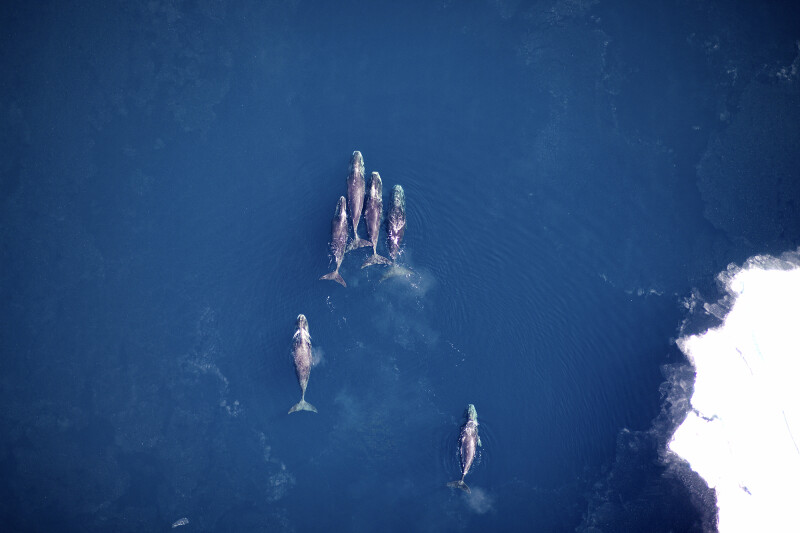
Over two decades the lab regularly tested bowhead whales harvested during annual fall subsistence hunts in waters off the North Sope of Alaska. Whales filter seawater for their food and consume krill that contain algal toxins acquired from the food web. Lefebvre and fellow researchers found that fecal samples from these whales could tell them the level of toxins in the whale poop.
"Nobody had a data set like this," said Lefebvre. "Instead of going out every year and collecting samples across the marine environment, the whales did it for us. Their samples give us a snapshot of what is in the food web every year, as sampled by the whales."
The research team tested 205 bowhead whales from 2004 to 2022 and determined they now had enough data to look for changes over time. They wanted to specifically track concentrations of domoic acid and saxitoxin, another algal toxin produced by a marine algae called Alexandrium.
They found saxitoxin in from half to 100% of bowhead whales samples annually over 19 years. The prevalence of saxitoxin was even higher than that found for domoic acid, likely because saxitoxin-producing algae also form cysts that fall to the ocean floor during blooms. They accumulate until warmer bottom water conditions cause them to germinate and to seed a new bloom and more toxin production, researchers said. This then presents a second source for bloom initiations for this species. Their findings were consistent with other studies showing that warmer ocean conditions increase the risk of Alexandrium blooms in the Arctic.
Lefebvre noted that some of the biggest beds of Alexandrium cysts in the world are in northern Alaskan Arctic oceans. Historically bottom water temperatures have been too cold for cyst germination, but over the last decade bottom temperatures have periodically become warm enough for them to begin germinating.
"This is," she said, "like a sleeping giant awakening."
Scientists also used ocean and climate data from a monitoring buoy in the Beaufort Sea to compare toxins in bowhead whales to a measure of ocean temperature called heat flux.
Based on dominant currents in the Arctic, they found that whales feeding in waters with higher heat flux generally contained higher concentrations of algal toxins. They also determined that winds that drive major currents in the Arctic could help reduce or increase that heat flux into the Beaufort Sea, which would in turn reduce or increase the risk of harmful algal blooms.
Bowhead whale samples were also compared to changes in sea ice, which had radically declined in recent decades. With less sea ice, sunlight warms the ocean more quickly and algae grows faster. In years with the largest reductions of sea ice in June the water is warmer in July, boosting odds of harmful algal blooms and rising toxin levels in whales.