

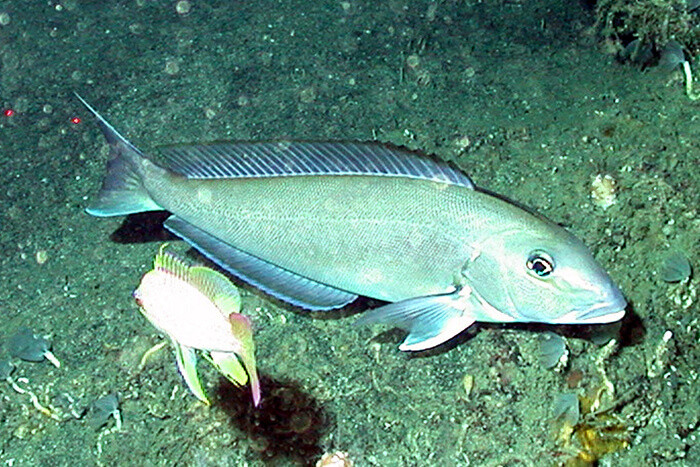
The National Oceanic and Atmospheric Administration (NOAA) announced closing the commercial blueline tilefish fishery on Nov. 10 through the end of the fishing year, Dec. 31, from Virginia to Maine.
100 percent of the commercial blueline tilefish were projected to be harvested, and, under the regulations, NOAA is required to close the fishery. Based on the weekly landings from dealer reports and other information, they projected that 100 percent had been caught.
The Mid-Atlantic Fishery Management Council managed golden and blueline tilefish from Virginia through Maine under the Tilefish Fishery Management Plan, which was developed by the council in 2001, and has operated under an individual fishing quota program since the implementation of Amendment 1 in 2009.
Both species of tilefish have been prized by recreational anglers; however, until around 2016, only goldens had been closely regulated, specifically in the Delaware region with bluelines being landed in high numbers.
Mid-Atlantic states put new limits in place for both species in 2016, according to Delaware Public Media. Fishermen stated that the two distributions overlap; however, there is some separation by depth. “The unfortunate thing with tilefish is they occupy such extreme depths that once you pull that fish up from the bottom, they go through some barotrauma, and typically it ends up in a dead fish. So, once it hits the surface, folks should retain those fish,” Stew Michels told Delaware Public Media.
Most of the fishing activity occurs in Southern New England and Mid-Atlantic waters, and the majority of tilefish are caught with bottom longline gear. The recreational component of the tilefish fishery today is smaller than it has ever been.