Atlantic Salmon Federation officials are urging consumers to avoid farmed Atlantic salmon, contending that fish farms are harmful to wild Atlantic salmon.
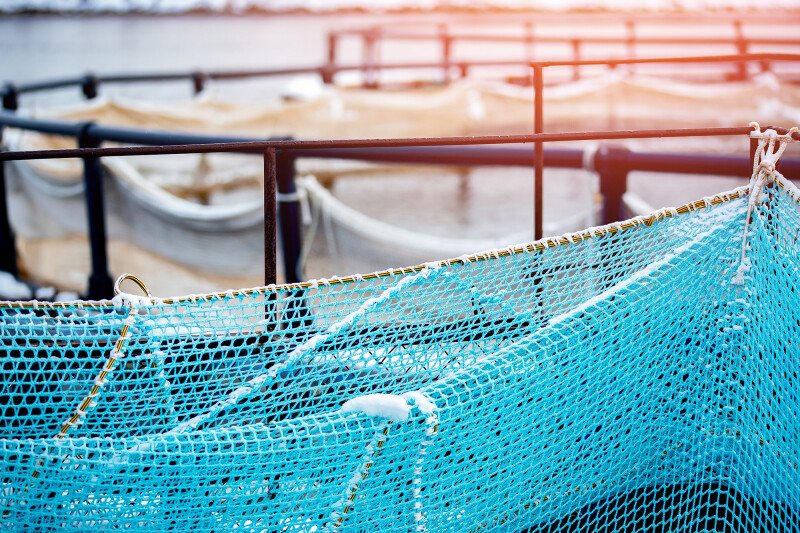
It matters that 99.9 percent of Atlantic salmon consumed globally is farmed in sea cages, because farmed salmon escape from these sea cages and harm wild Atlantic salmon, according to Salmon Inc., which is led by the North Atlantic Salmon Fund and the Atlantic Salmon Federation in New Brunswick, Canada.
Over the past five decades, salmon farms with sea cages off Norway, Scotland, Iceland, Atlantic Canada, British Columbia, the United States, Tasmania and Chile, ASF said, in a statement released on Aug. 25 via the Society of Environmental Journalists.
Wherever that industry goes, wild Atlantic salmon are the first to suffer irreversible consequences, ASF said.
Their report also cites data showing that between 2012 and 2022, 865 million farmed Atlantic salmon died prematurely in sea cages. Flesh-eating sea lice, disease-carrying bacteria, pesticides, antibiotics and feces float out of sea cages, harming marine life, they said.
The report notes that Alaska, Washington State, and California in the U.S., as well as Argentina, have banned salmon farms. Farming of salmon and other finfish has been banned in Alaska since 1990 over concerns of environmental threats to wild stocks and economic competition.
While there is no definitive data on how eating farmed salmon affects human health, studies show that ocean-farmed salmon contains microplastics, polychlorinated biphenyls and antibiotic-resistant bacteria, all of which may be linked to a range of health problems, the report said.
Alaska Gov. Mike Dunleavy has proposed lifting the state's ban on commercial finfish farmed to boost food security and economic opportunity. His bill mandates that these fish be sterilized triploids, incapable of reproduction, and that the farms must use escape-proof barriers.
Many Alaskans, including legislators, are expressing concern over risks posed by fish farms to wild fisheries.
Alaska Senate president Gary Stevens, of Kodiak, said that legislators will listen to whatever the governor has to say about fish farming, but in the long run, it is not likely to happen.
"I don't see it happening in Alaska; there are too many negatives," he said.