

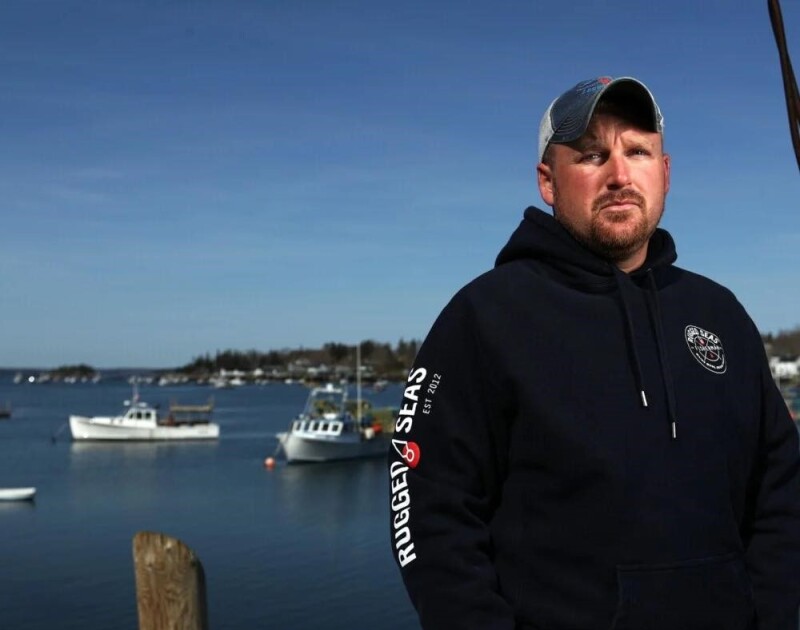
For as long as he can remember, Dustin Delano’s life has been measured by the tides. He was just a small child when he first climbed aboard his father’s lobster boat on Maine’s Midcoast- a kid curled up on the fish tote full of rope while his dad hauled traps.
“He was a young, single father in his early twenties- working hard as a lobsterman while raising a son,” Delano recalled. “I’d help his sternum fill bait bags and band lobsters.”
That early introduction to the scent of salty air, a diesel hum, and determination set the course for Delano’s life. His father showed him what it meant to work for every dollar, and his mother’s foster father, Stephen Lash, taught him the importance of giving back. With their help, Delano pieced together his first set of traps- some used gear from his dad, and a few used traps fronted by Lash until he could afford to pay for them on his own. At just 11 years old, he was hauling by hand from a 17-foot wooden skiff powered by a 25-horse Yamaha.
“I wasn’t allowed to go out alone,” he remembered. “So, I’d wait for my father to get back from a long day of lobstering, and together we’d head back out to haul my traps in the afternoon. I can still hear him saying, ‘Hurry up and pull that trap up- I don’t want to be out here all night!’”
Those early days and long afternoons on the water, with laughter mixed with lessons, shaped Delano’s work ethic. He saved every cent he could and, with the help of family and friends, restored a 34-foot wooden lobster boat called Provider during his senior year of high school. “Every bit of my savings went into getting that boat ready,” he said. “It marked the beginning of my deep and lasting love for the lobster fishery.”
Rooted in the rhythm of Maine’s coast
Today, Delano speaks about the fishery with the same sense of purpose that has driven generations of Maine lobstermen. “The fishery isn’t just a job for me- It’s a foundation of who I am,” he said. “Every sunrise over the bay, every haul of the trap, every conversation at the wharf- it’s part of the rhythm of life that has shaped generations before me and continues to define who we are today.”
That deep sense of place — and of responsibility to it — has always guided Delano’s decisions. He’s quick to note that Maine’s fishing communities are built on more than boats and traps; they’re sustained by neighbors who lend a hand, families who mend gear together, and a shared commitment to stewardship. “Our fishery isn’t just about the catch. It’s about protecting a way of life that connects us to the ocean, to each other, and to something larger than ourselves,” he said. “Preserving it isn’t optional, it’s a responsibility.”
From on deck to the front line
After decades of hauling, Delano stepped away from the helm. The decision to leave full-time fishing was difficult, but it came from the same place of conviction that has driven him since he was young. “Stepping away from my own career as a commercial fisherman to take on an advocacy role wasn’t easy,” he admitted. “But it’s one I’ve never regretted.”
Beginning as co-founder and chief operating officer of the New England Fishermen’s Stewardship Association (NEFSA) and now chairman and chief strategist, Delano has become one of the strongest voices for working fishermen in Maine, New Hampshire, and Massachusetts. His leadership has helped shape conversations around some of the industry’s biggest challenges: offshore wind development, federal whale regulations, and shifting management priorities.
“Through NEFSA, we’ve shown that when fishermen stand together, we can make real change,” he said. “We can protect our livelihoods, our traditions, and the ocean we depend on.”
Delano’s efforts have helped bridge the divide between fishermen, scientists, and policymakers- groups that often share the same goals but struggle to speak the same language. Under his guidance, NEFSA has partnered with research programs like the Maine lobster collector survey, connecting working lobstermen directly with scientists to improve data on lobster recruitment. The organization also helped lead the v-notch campaign alongside the Maine Lobstermen’s Association and the New Hampshire Commercial Fishing Association, reaffirming a long-standing conservation practice of protecting egg-bearing females as a sign of true stewardship.
“Bridging these gaps isn’t easy,” Delano said, “but it’s vital. When fishermen, scientists, and regulators work together with mutual respect, we build a stronger, more informed, and more sustainable future for our fisheries and our coastal communities.”
Passing it forward
Despite his busy schedule in advocacy and policy, Delano has never lost sight of the next generation. Mentorship, for him, is both personal and professional. “I was fortunate to grow up learning from hardworking fishermen who took the time to show me the ropes,” he shared. “I feel a real responsibility to do the same for those coming up behind me.”
Whether it’s offering advice on gear or helping young lobstermen navigate the maze of modern regulations, Delano believes that guidance and encouragement can make all the difference. “It’s not easy for young people to break in today,” he said. “Through NEFSA, I also see mentorship on a larger scale. Advocating for policies that protect opportunities for the next generation and creating space for young voices in conversations about the future of the fishery.”
That philosophy echoes through the community he represents. On any given day, you might find Delano at a hearing in Augusta or a wharf meeting in Stonington, still the same fisherman at heart, now carrying the collective voice of the waterfront.
Honoring the past to build the future
Being recognized as a National Fisherman Highliner during the 50th anniversary year holds special meaning for Delano, who described the honor as both a personal recognition and a reflection of the people and community who helped shape him. “I think about my father, who first brought me out on the boat as a kid and taught me what hard work and perseverance really look like. I think about mentors like Stephen and Isaac Lash, who believed in me when I was just starting out, and all the fishermen who’ve stood shoulder to shoulder with me over the years- on the docks, in meetings, and out on the water,” he said.
For Delano, the honor belongs to every fisherman who’s helped keep New England’s working waterfronts alive. “This recognition feels bigger than any one person,” he said. “It represents the generations of fishermen who have built and sustained this way of life, and the next generation who are ready to carry it forward.”
Looking at the next 50 years
Looking ahead, Delano envisions a future where the same values that built the industry —hard work, integrity, independence, and respect for the ocean — continue to guide it. He hopes to see greater collaboration between fishermen and science, including industry-based surveys that draw on the experience of those who know the water best. “When firsthand knowledge is combined with sound science,” he explained, “it leads to better, more credible data and stronger management decisions.”
Delano said he also wants to see decision-making bodies like the Atlantic States Marine Fisheries Commission and federal councils rebuild trust with fishermen through genuine collaboration. “That partnership between fishermen, scientists, and policymakers is the only way forward if we want to secure a future that works for everyone,” he explained.
As for NEFSA, Delano hopes its reach continues to grow, serving not just New England but coastal communities across the nation. “Our mission has always been to ensure that fishermen have a real voice in shaping their own future,” he said. “That voice must next be lost.”
Fifty years from now, he hopes those who follow will still see the same scenes that have defined his life: family-owned boats at the dock, early mornings on the bay, and the next generation learning to haul their first traps.
“If we can still see thriving working waterfronts, vibrant coastal communities, and a new generation proudly carrying on this tradition,” he said, “Then I’ll know we’ve done right by the generations before us, and those yet to come.